What Is Gemstone Treatment in Modern Jewelry?
In today’s jewelry industry, gemstone treatment is a widely accepted practice, especially when working with semi precious stones. Many natural gemstones, such as turquoise, tourmaline, and aquamarine, often contain internal fractures or porous structures. Without treatment, these stones may not withstand the demands of cutting, drilling, and polishing during gemstone processing.
To improve usability and durability, manufacturers apply various techniques known as gemstone enhancement. These methods are not necessarily deceptive; instead, they help transform fragile raw materials into stable and wearable products such as gemstone beads and finished jewelry.
Why Stabilization Is Necessary
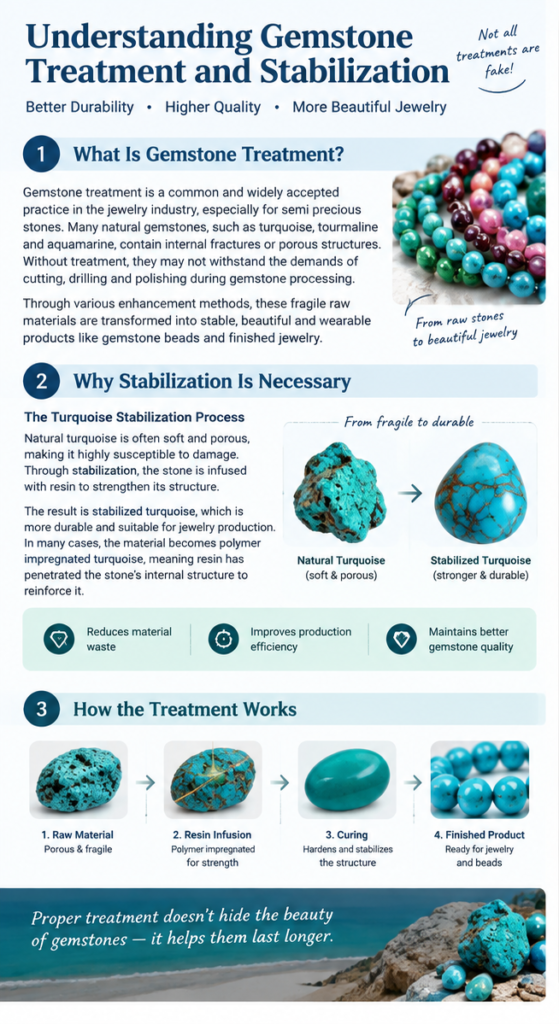
One of the most common treatments is the turquoise stabilization process. Natural turquoise is often soft and porous, making it highly susceptible to damage. Through stabilization, the stone is infused with resin to strengthen its structure.
This results in stabilized turquoise, which is more durable and suitable for jewelry production. In many cases, the material becomes polymer impregnated turquoise, meaning resin has penetrated the stone’s internal structure to reinforce it. This significantly improves both production efficiency and consistency, which is essential for large-scale manufacturing and wholesale supply.
Additionally, stabilization helps reduce material waste, allowing suppliers to maintain better gemstone quality while controlling costs.
Is Treated Gemstone Safe to Wear?
Safety largely depends on the materials used during treatment. High-quality processes typically involve stable resins that, once cured, are safe for everyday wear. Products like epoxy resin jewelry are commonly used in the industry and are generally considered safe under normal conditions.
However, risks may arise from low-quality treatments. For example, some dyed gemstones may contain harmful chemical residues, including heavy metals. These substances can potentially cause skin irritation if they leach out over time. Therefore, sourcing from reliable manufacturers is critical to ensure safety and compliance.
How to Identify Treated Gemstones
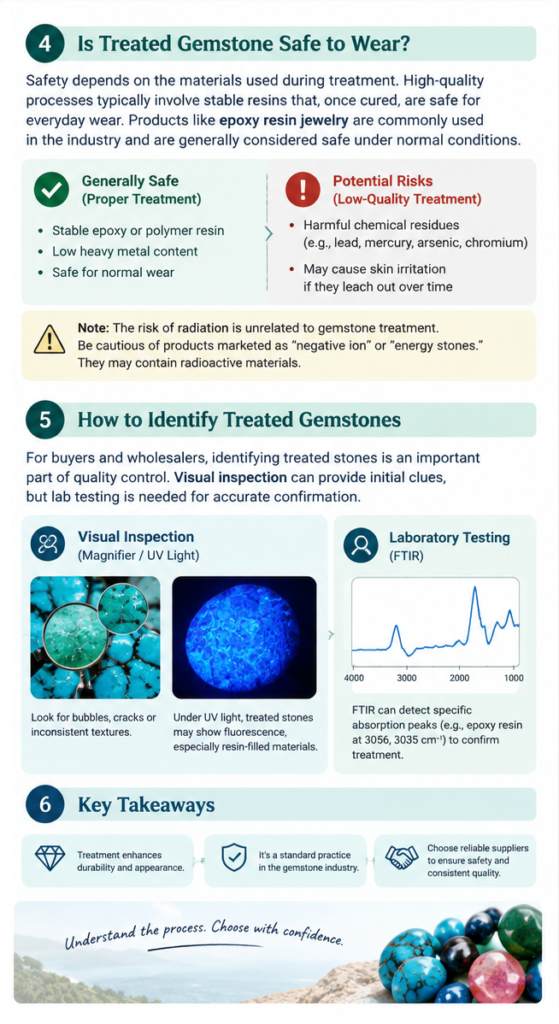
For buyers and wholesalers, identifying treated stones is an important part of quality control. Visual inspection can provide initial clues. Using a magnifier, you may notice tiny bubbles or inconsistencies within the stone—common signs of treatment.
Under UV light, certain treated stones, especially those with resin, may show fluorescence. This is often seen in stabilized turquoise or other enhanced materials. However, for accurate confirmation, laboratory methods are required, particularly when evaluating gemstone quality in bulk purchases.
Conclusion
Gemstone treatments, including stabilization and resin infusion, play a crucial role in modern jewelry production. When applied correctly, they enhance durability, improve appearance, and ensure consistent supply. Understanding these processes helps buyers make informed decisions and maintain high standards in sourcing and design.