The Emerging Role of Organza Jewelry in Wristwear
Within the broader organza jewelry category, bracelets and wrist accessories are transitioning from niche experimentation to a promising expansion segment. While organza has already gained traction in brooches, hairpieces, and earrings, its application in wristwear—particularly the organza bracelet—remains underdeveloped in commercial markets.
This gap presents a clear opportunity. In design education and artisan circles, organza bracelets are already validated as a viable category, often appearing alongside necklaces and earrings in structured collections. However, the lack of scaled production among global brands signals untapped potential for both independent designers and wholesale suppliers.
Design Logic: From Decorative Fabric to Structural Element
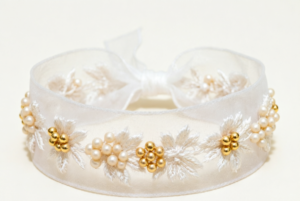
A key evolution in designer fabric bracelet development lies in redefining organza’s role—from a purely decorative material to a structural component. Rather than simple ribbon-based designs, more advanced approaches integrate organza with metal frameworks, beads, or resin elements.
For example, combining sheer organza layers with metal bases can create a strong contrast between softness and rigidity, enhancing visual depth. Similarly, using organza as a base for an embroidered bracelet allows for intricate detailing while maintaining a lightweight, ethereal aesthetic. These hybrid constructions align with current trends in mixed-material jewelry, where texture contrast drives perceived value.
Product Strategy: Why Statement Cuffs Lead
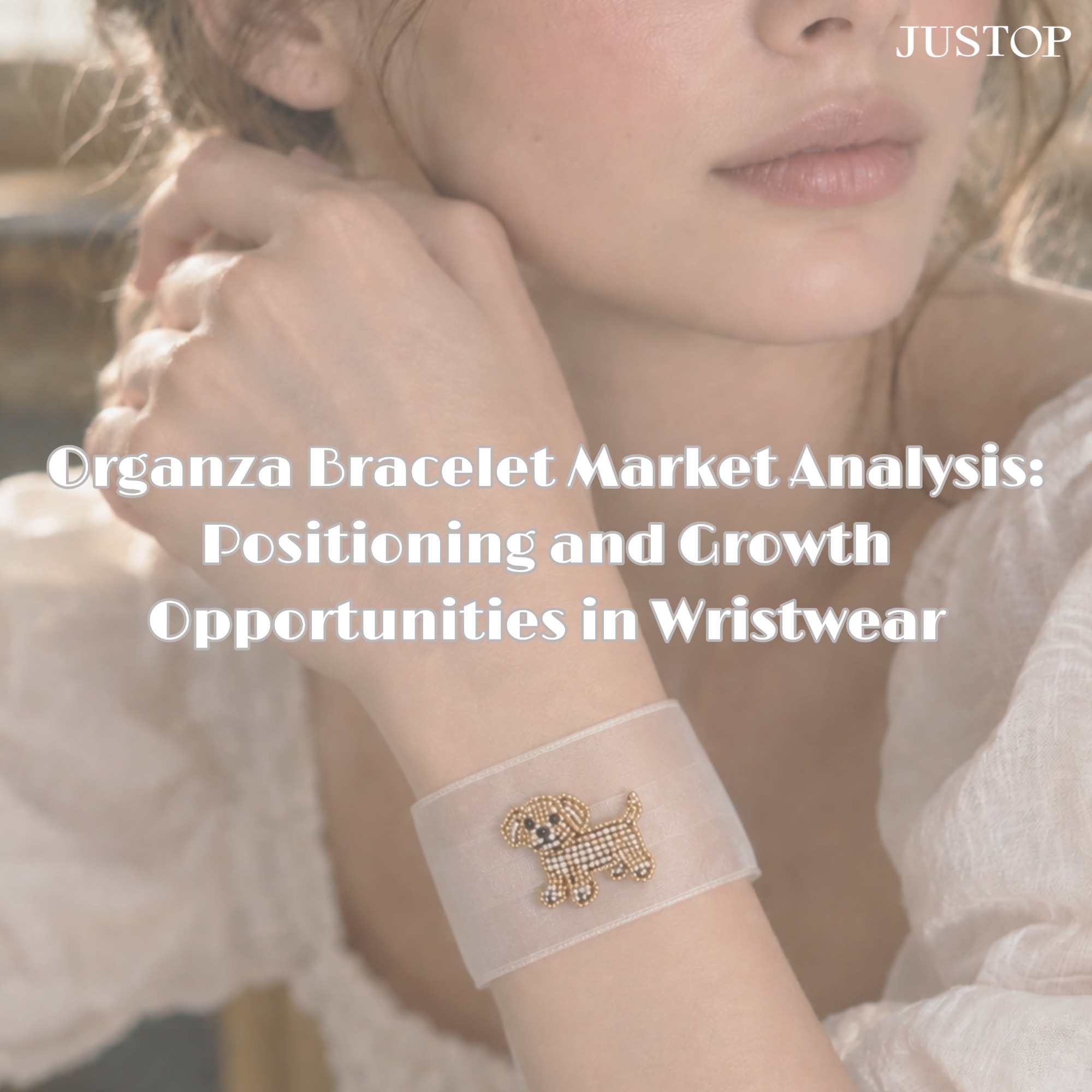
From a commercial standpoint, the statement cuff bracelet format offers the strongest entry point. Organza’s defining qualities—transparency, volume, and layering—are best expressed in wider silhouettes. A fashion cuff bracelet made with pleated or layered organza can create a bold visual impact, making it more suitable for retail display and social media visibility.
In contrast, thinner chain-based designs limit organza to a secondary role, reducing differentiation. Statement cuffs, on the other hand, align with consumer demand for expressive, standout accessories, particularly within the romantic style jewelry segment.
Material Innovation and Differentiation
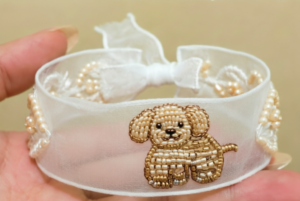
The future of organza accessories in wristwear lies in material pairing. Current opportunities include:
- Organza + pearls for soft, bridal-inspired designs
- Organza + metal for high-contrast, modern aesthetics
- Organza + crystals for light-reflective, decorative appeal
- Organza + leather or chains for a more fashion-forward, edgy look
These combinations not only expand design possibilities but also support tiered pricing strategies for different market segments.
Market Positioning and Commercial Potential
Given the limited presence of organza bracelets in established brand collections, designers can position these products in two key ways: as couture-inspired handcrafted pieces or as statement items within a broader accessory line. Both approaches benefit from organza’s strong visual identity and storytelling potential.
Key Challenge: Wearability and Comfort
Despite its aesthetic advantages, organza presents a critical challenge—comfort. Its naturally stiff texture, especially in synthetic forms, can cause irritation when worn directly on the skin. To address this, refined finishing techniques such as soft linings, edge binding, or layered construction are essential.
Ultimately, success in the organza bracelet category will depend on balancing visual impact with wearability—transforming a delicate textile into a commercially viable, fashion-forward product.