
Choosing the right jewelry materials affects more than production costs and appearance. Metal density also influences jewelry weight, wearing comfort, and product positioning. For jewelry designers, brands, and wholesale buyers, understanding these differences helps match each material to the right design.
How Metal Density Affects Jewelry Weight
When comparing jewelry with the same dimensions and solid structure, metal density determines its relative weight. Stainless steel typically has a density of 7.9–8.0 g/cm³, brass varies by alloy composition, generally around 8.4–8.7 g/cm³, and sterling silver is approximately 10.2–10.4 g/cm³.
In general, stainless steel is the lightest, brass falls in the middle, and sterling silver is the heaviest. However, actual jewelry weight also depends on wall thickness, hollow construction, and overall design.
Stainless Steel Jewelry: Best for Lightweight Designs
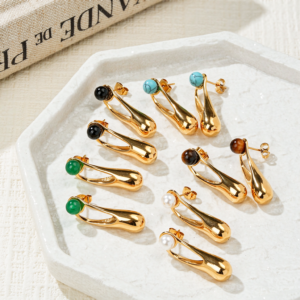
Stainless steel jewelry is well suited to oversized earrings, statement necklaces, long chains, and everyday bracelets. Its relatively low density helps designers create larger pieces without adding as much weight as denser metals would.
For brands developing lightweight jewelry, stainless steel offers a practical balance of durability, versatility, and production cost. It is especially suitable for everyday fashion collections and contemporary statement pieces where comfort matters.
Brass Jewelry: A Balance of Weight and Cost
Brass jewelry provides a middle ground between stainless steel and sterling silver in terms of density and product positioning. It works well for medium-sized pendants, brooches, wide bangles, and vintage-inspired designs.
Brass also supports various surface finishes, including gold plating and antique-style treatments. For fashion brands seeking distinctive styles at competitive costs, brass can be a versatile choice. When comparing stainless steel vs brass, consider the desired weight, finish, budget, and manufacturing requirements.
Sterling Silver Jewelry: Ideal for Refined Designs
Sterling silver jewelry is often used for rings, delicate pendants, small earrings, and fine necklaces. Its higher density can give compact pieces a substantial feel, while its established market positioning supports premium collections.
However, silver is not automatically the best option for every small design. Designers should also consider wearing comfort, construction, material costs, and the intended retail price.
How to Choose the Best Metal for Jewelry Making
The best metal for jewelry making depends on the design, size, target customer, and budget.
- Stainless steel: Best for larger, lightweight designs and everyday fashion jewelry.
- Brass: Suitable for statement pieces, plated jewelry, and cost-conscious fashion collections.
- Sterling silver: Ideal for refined designs, rings, delicate pendants, and premium collections.
For brands working with a wholesale jewelry manufacturer, choosing materials early helps align product weight, manufacturing costs, and market positioning. In custom jewelry manufacturing, the right material is the one that balances design requirements, wearing comfort, and commercial goals.