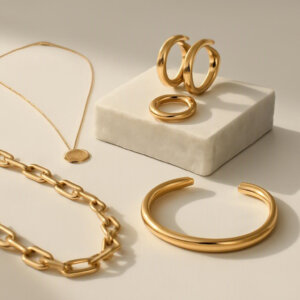

Jewelry has played a significant role in European fashion, evolving through different artistic and cultural movements. From Medieval jewelry with its religious symbolism to the lavish designs of the Victorian locket, each era brought unique styles, materials, and techniques.
Medieval Jewelry (5th – 15th Century)
Jewelry in this period symbolized faith and status. Crafted mainly from gold and silver, pieces often featured religious motifs. Enamel work was popular, while the lower classes wore brass or tin. Necklaces were rare, with brooches and rings being the dominant accessories.

Renaissance Jewelry (14th – 17th Century)
The Renaissance saw a shift toward artistic expression, influenced by classical mythology. Renaissance pendants adorned with pearls and colorful enamel became popular. Filigree and miniature paintings were introduced, elevating jewelry to a form of wearable art.
Baroque & Rococo Jewelry (1600 – 1800s)
The Baroque pearl necklace reflected the grandeur of the time, with bold, asymmetrical designs. Rococo jewelry, in contrast, was delicate and feminine, featuring bows and floral motifs. A Rococo brooch with intricate scrollwork became a must-have accessory for aristocratic women.
Georgian Jewelry (1714 – 1837)
Handcrafted and unique, Georgian jewelry featured nature-inspired motifs and early diamond-cutting techniques. The cameo brooch became a signature piece, along with richly colored gemstones like the garnet ring vintage, symbolizing love and passion.

Victorian Jewelry (1837 – 1901)
Jewelry became sentimental, influenced by Queen Victoria’s life. Victorian lockets held portraits or hair, while mourning jewelry Victorian used black enamel and jet stones. The rise of goldsmithing led to the popularity of the antique gold ring, adorned with opals, pearls, and garnets.
Edwardian & Art Nouveau Jewelry (1901 – 1915)
Edwardian jewelry was refined, favoring platinum and lace-like filigree. Edwardian diamond rings with Old European-cut diamonds were elegant and sophisticated. The Art Nouveau necklace celebrated nature with swirling patterns and materials like enamel, moonstone, and opal.
Timeless Antique & Retro Jewelry
Many historical styles remain fashionable today. The pearl choker necklace, once a Victorian favorite, is still a staple of elegance. The gold signet ring, once a symbol of nobility, is now a fashion statement. Antique sapphire rings and retro gold bracelets continue to inspire modern designs.

From Medieval jewelry to Old European cut diamonds, European jewelry history reflects craftsmanship and artistry that still influence fashion today.