
Understanding Soft Enamel and Hard Enamel
When choosing between soft enamel and hard enamel, many people assume the difference lies in material hardness. In reality, both use similar base metals and color fills. The true distinction is in the finishing process and final enamel surface.
Soft enamel retains its recessed color areas, while hard enamel is polished flat. This difference impacts not only appearance but also durability, cost, and suitability for different types of enamel jewelry and accessories.
Visual and Texture Differences
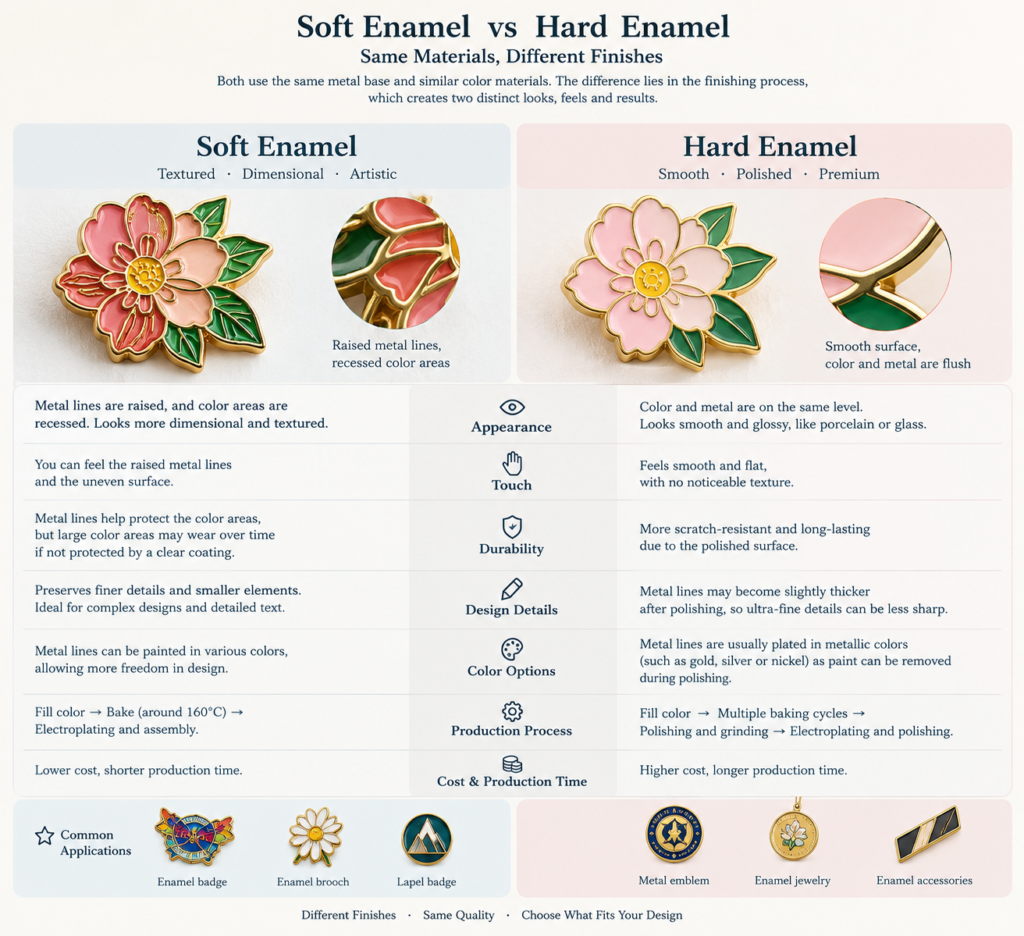
The most noticeable difference between the two lies in texture. Soft enamel creates a textured enamel effect, where raised metal lines sit above the colored areas. This gives a dimensional, almost embossed look that adds depth and detail. It is commonly used in items like enamel badge designs and promotional pieces.
In contrast, hard enamel undergoes additional polishing to create a smooth, flat polished enamel surface. The result is a refined finish that feels sleek to the touch and appears more premium. This makes it a popular choice for high-end metal badge designs and collectible pieces.
Production Process and Techniques
Both types begin with the same base process: stamping a metal mold and filling recessed areas with pigment. However, the finishing steps differ significantly.
Soft enamel skips the polishing stage. After filling and baking, the piece moves directly to plating, making it faster and more cost-effective for large-scale custom enamel production.
Hard enamel, on the other hand, involves multiple rounds of baking and polishing. This process creates a seamless enamel finish, where metal and color sit flush together. The added steps increase both production time and cost but result in a more durable and elegant product.
Durability and Design Flexibility
In terms of durability, hard enamel is generally more resistant to scratches due to its smooth, compact surface. This makes it ideal for long-term use in premium custom metal jewelry or official insignia.
However, soft enamel offers greater flexibility in design. Because it doesn’t require polishing, it can preserve finer details, making it suitable for intricate logos, small text, and complex patterns often seen in a lapel badge or decorative accessories.
Choosing the Right Option
The choice between soft and hard enamel depends on your priorities. If you need bold texture, detailed design, and cost efficiency, soft enamel is a strong option. If you prefer a smooth, durable, and high-end look, hard enamel is the better choice.
Ultimately, both techniques are valuable forms of enamel craft, each serving different market needs. Understanding their differences ensures you select the right solution for your design, budget, and application.