What Is Acid Wash Stone Treatment
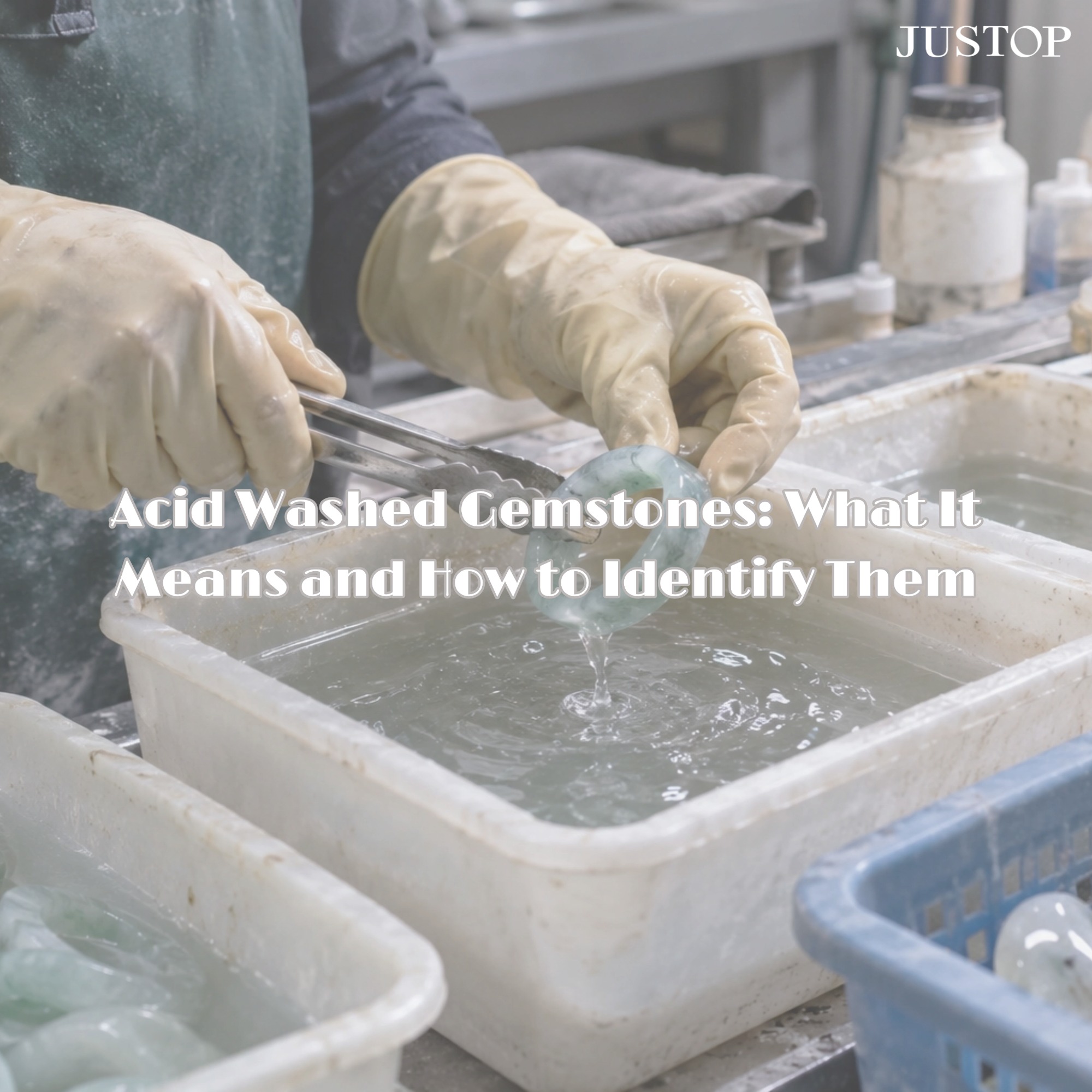
In the jewelry industry, acid wash stone refers to a process where strong acids are used to remove impurities from natural stones. This method is part of broader gemstone enhancement techniques designed to improve appearance, clarity, and color. It is commonly applied to materials like quartz and jade, making it a widely used form of crystal treatment in both fine and fashion jewelry.
During this process, acids dissolve unwanted minerals such as iron oxides or carbonates. However, the structure of the stone may become more porous, which is why many treated gemstones are later stabilized with resin or polymer filling.
Why Jade and Other Stones Are Treated
One of the most well-known applications is jade treatment. Natural jade often contains discoloration or uneven tones. Acid treatment helps remove these imperfections, resulting in a brighter and more uniform appearance.
Similarly, quartz treatment is widely used to enhance clarity and remove surface stains, especially in mass-market jewelry. These treatments are not inherently negative, but transparency is key—buyers should always know whether a stone has been treated.
Are Treated Stones Safe to Wear
For most consumers, wearing treated stones is generally safe if the materials have been properly neutralized and processed. However, lower-quality treatments may degrade over time, affecting both durability and appearance. This is especially relevant when comparing real vs fake jade, as heavily treated jade can sometimes be mistaken for natural high-grade material.
How to Identify Treated or Fake Stones
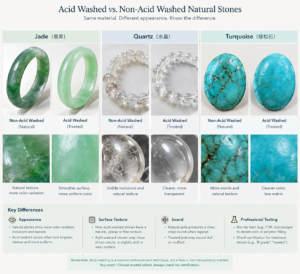
Understanding how to identify jade and other gemstones is essential for both buyers and resellers. Here are a few practical methods:
- Visual inspection: Treated stones may show fine cracks or a slightly dull, resin-like surface instead of a natural glassy luster.
- Texture and structure: Acid-treated jade often appears less dense, which can impact its overall feel.
- Sound test: When gently tapped, natural jade produces a clear tone, while treated or fake jademay sound dull.
For more accurate results, professional gemstone testing is recommended. Techniques such as infrared spectroscopy can detect polymer fillings, making it easier to confirm jade authenticity and distinguish natural stones from fake gemstones.
Final Thoughts
Acid washing is just one of many gemstone identification challenges in today’s jewelry market. While treatments can improve visual appeal and affordability, they also require careful evaluation.
Whether you are sourcing for wholesale or purchasing for personal use, understanding how to spot fake jade and recognizing treatment signs will help you make more informed decisions. Transparency, proper labeling, and reliable suppliers remain the most important factors in ensuring quality and trust in the gemstone industry.