
Pearls are among the few gemstones created by living organisms, and their beauty varies widely depending on origin, structure, and cultivation method. Understanding pearl types, from cultured pearls to rare natural pearls, is the key to recognizing real pearl value and making informed choices.
Sea Water Pearls: Luster, Rarity, and Prestige
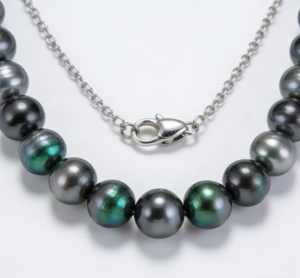
Sea water pearls are known for their sharp brilliance, dense nacre, and generally larger size (with Akoya as the exception). Because of lower production and stricter growing conditions, they are typically positioned in the mid-to-high end of the market.
South Sea Pearls
Among all pearls, South Sea pearls are often regarded as the pinnacle.
- South Sea white pearls are celebrated for their large size (often over 12mm) and silky white luster with subtle pink or silver overtones.
- Golden South Sea pearls are prized for rich, saturated golden hues, especially deep “champagne” or “tea gold” tones. Color intensity is a major pearl value factor, directly influencing South Sea pearl value.
Tahitian Black Pearls
Known as the “queen of black pearls,” Tahitian black pearls display a wide spectrum of Tahitian pearl colors, from peacock green to platinum gray. Perfectly round specimens are rare, making drops and baroque pearls especially popular in high-end designs.
Akoya Pearls
Famous for mirror-like shine, Akoya pearls are smaller but exceptionally refined. Their sharp reflection and cool overtones make the Akoya pearl necklace a timeless classic in fine jewelry.
Freshwater Pearls: Diversity and Value Evolution
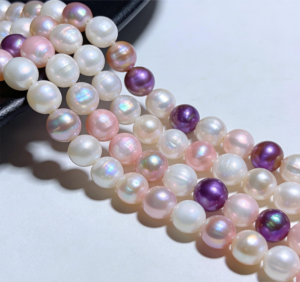
Freshwater pearls are valued for their variety and affordability, with quality improving dramatically in recent decades.
Traditional Freshwater Pearls
Once considered entry-level, top-grade freshwater pearls now rival Akoya pearls in pearl luster and surface quality. Their wide range of pearl shapes, including rounds and freshwater baroque pearls, offers strong design flexibility in freshwater pearl jewelry.
Edison Pearls
Edison pearls represent the high end of freshwater cultivation. With large sizes (10–18mm), high roundness, and vibrant colors, an Edison pearl necklace can visually compete with many sea water pearls at a more accessible price point.
Baroque Pearls and Artistic Expression
Are baroque pearls valuable?
Absolutely. While they lack perfect symmetry, baroque pearl jewelry is prized for uniqueness and artistic character. High luster, distinctive forms, and strong design execution can elevate baroque pearls into the realm of fine and even bespoke jewelry.
Natural Pearls: Ultimate Rarity
Natural pearls are no longer mainstream commercial products but rare collectibles.
- Conch pearls, with their flame-like structure
- Melo pearls, known for warm mango tones
- Abalone pearls, admired for their iridescent colors
These pearls are valued not by grading standards, but by rarity, origin, and natural beauty.
How to Choose Pearls: A Practical Pearl Buying Guide
When selecting pearls, focus on pearl luster, surface cleanliness, and suitability for your budget and wearing occasion. Whether choosing sea water pearls for brilliance, freshwater pearls for versatility, or baroque pearls for individuality, understanding pearl grading and pearl value factors ensures the best long-term satisfaction.