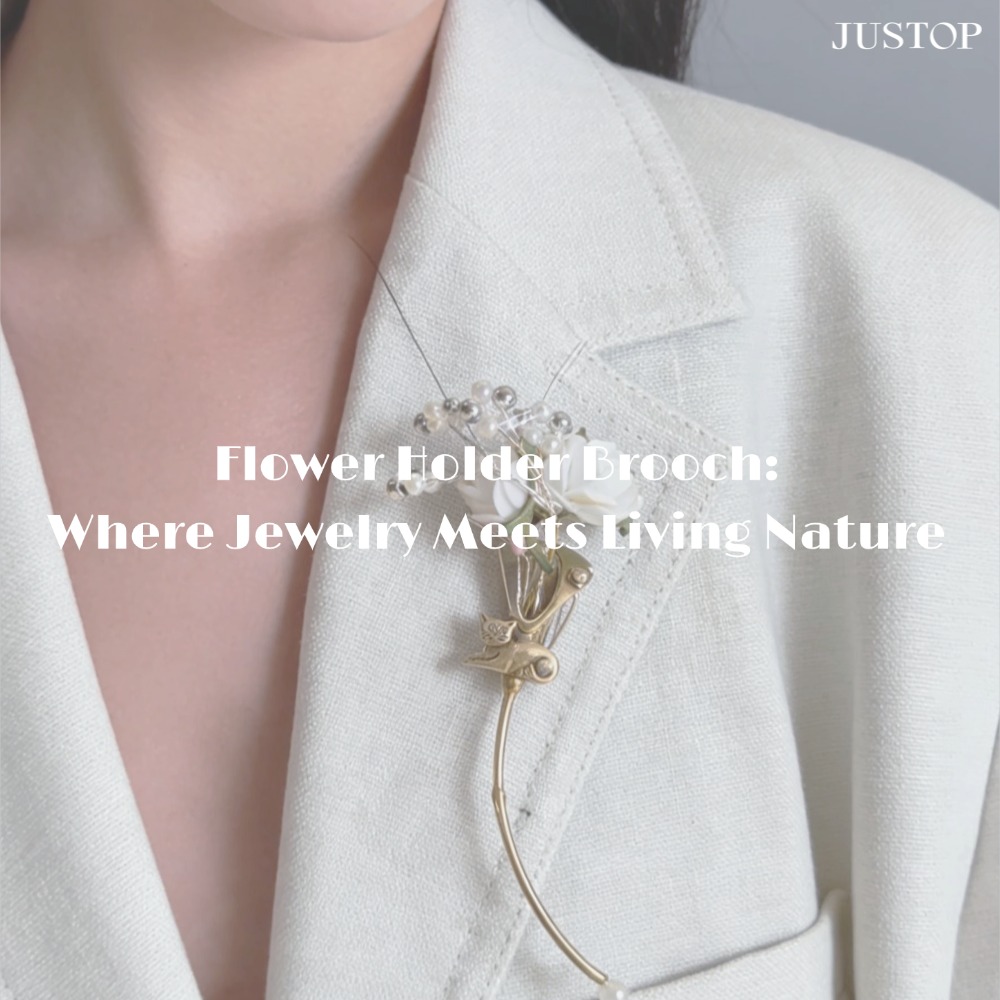
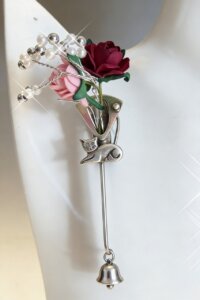
A Flower Holder Brooch, also known as a vase brooch or wearable vase, is built around a simple yet poetic idea: bringing real flowers into jewelry. By allowing a single bloom, stem, or leaf to be worn on the body, this design blurs the line between the permanence of jewelry and the fleeting beauty of nature. As a form of wearable art jewelry, it offers both emotional resonance and strong visual storytelling.
Global Appeal and Cultural Influence
The popularity of the flower holder brooch varies by region, but it consistently resonates with audiences who value design, craftsmanship, and concept-driven objects.
In Japan, this type of botanical brooch has found a particularly enthusiastic audience. Rooted in wabi-sabi aesthetics and an appreciation for seasonality, Japanese consumers favor small-scale, quiet, and poetic designs. These pieces often appear in independent jewelry studios, lifestyle boutiques, and craft exhibitions, sometimes paired with a single wildflower or dried stem.
Across Western Europe and the Nordic countries, the appeal lies in conceptual clarity and sustainability. Cities like Paris, Berlin, Amsterdam, and Copenhagen embrace conceptual jewelry that combines minimalist structure with thoughtful function. Here, the flower holder brooch is appreciated as a modern brooch and a collectible object, frequently seen in design markets and museum jewelry shops.
In the UK and the United States, the audience is more niche but stable. Buyers often seek unique brooch designs with a strong narrative, making these pieces especially suitable for designer brooch collections and limited-edition artisan jewelry lines.
Materials and Craftsmanship
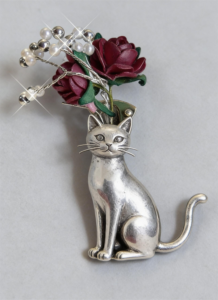
Most flower holder brooches rely on a balance between durability and delicacy. Metal remains the most common foundation, with brass brooch designs offering warmth and an organic feel, while silver and stainless steel support a cleaner, minimalist aesthetic. Surface treatments such as brushing or subtle polishing enhance the sculptural quality.
The flower chamber itself is often made from glass. A glass brooch using borosilicate or hand-blown tubes can hold a small amount of water, allowing fresh flowers to be worn. For lighter or more commercial designs, resin brooch options provide versatility in color and transparency without overwhelming the flower.
Styling and Wearability
Despite its artistic nature, the flower holder brooch is surprisingly versatile. Paired with a white shirt, linen dress, or tailored jacket, it becomes a striking statement brooch and an elegant brooch for blazer or brooch for dress. In more formal settings, a single white bloom against a dark outfit creates contrast and refinement.
Notably, many high-quality designs function beautifully even without flowers, standing on their own as minimalist brooch pieces within the world of contemporary jewelry.
By merging structure with ephemerality, the flower holder brooch transforms jewelry into a living, ever-changing expression—an intimate dialogue between design, nature, and the wearer.