
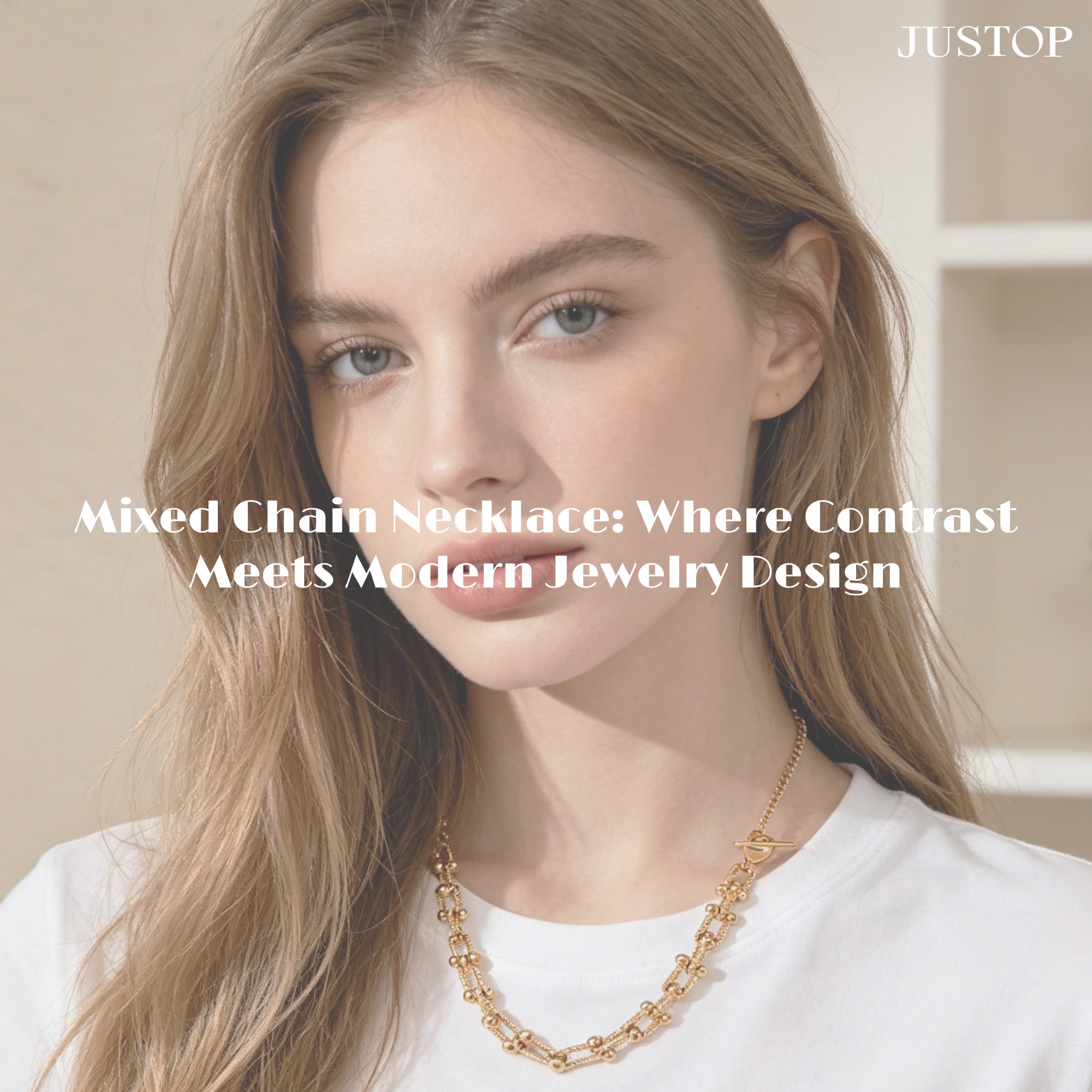
What Is a Mixed Chain Necklace?
A mixed chain necklace is defined by its creative fusion of two or more different chain styles within a single piece. Also known as a mixed link necklace or multi chain necklace, this design combines variations in texture, thickness, shape, or material to create striking visual contrast.
Unlike a traditional layered chain necklace, which stacks separate pieces, a mixed chain design integrates multiple chain types into one cohesive structure. The result is a dynamic composition—often featuring combinations like a cable chain necklace paired with a curb chain necklace, or a ball chain necklace blended with a paperclip chain necklace.
In simple terms, the upper section “mixes” different elements, while the lower section allows the chain to “flow” into a distinctive, expressive form.
A Design Rooted in History
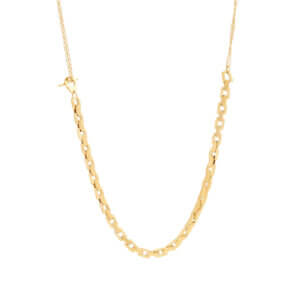
The concept of combining multiple chains is far from new. Its origins can be traced back to ancient civilizations. As early as the 4th century BCE, Greek jewelry featured multi-chain constructions, often arranged in triple-chain formations with intricate metalwork and central medallions.
By the 2nd century CE, during the Roman Empire, multi-chain necklaces had spread widely across regions such as Egypt and Roman Britain. Interestingly, design approaches differed across cultures. Western designs often arranged chains concentrically across the chest, while Eastern interpretations—such as those in Gandhara—merged chains at the back of the neck and allowed them to separate toward the front.
Modern Revival: From Minimalism to Statement Style
The resurgence of the mixed metal necklace and multi-chain aesthetic began in the 1990s, influenced by minimalist and industrial design movements. Designers started focusing on the structural beauty of chains themselves rather than relying solely on gemstones.
In the 2000s, independent designers pushed boundaries by experimenting with combinations like rope chain necklace elements paired with box chain necklace structures, introducing asymmetry and texture as core design features. Today, the trend has evolved into both bold and subtle forms—from chunky chain necklace statements to refined minimalist chain necklace styles.
Fast fashion and contemporary brands have further popularized the look, making double chain necklace and triple chain necklace variations accessible to a wider audience.
Why Mixed Chain Necklaces Stand Out
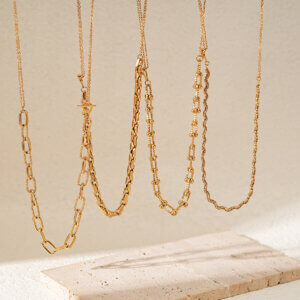
What sets a textured chain necklace apart is its ability to balance contrast and harmony. By blending different chain types—such as a link chain necklace with polished and matte finishes—designers create depth without overwhelming the wearer.
This versatility allows mixed chain necklaces to transition seamlessly between everyday wear and statement styling. Whether bold or understated, each piece tells a story of contrast, craftsmanship, and individuality.
The Future of Chain Layering in One Piece
As personalization continues to shape jewelry trends, the mixed chain concept is evolving beyond aesthetics into modular and customizable designs. From interchangeable links to charm additions, the mixed chain necklace is becoming a platform for self-expression.
In a market saturated with uniform styles, this hybrid approach offers something different: a balance between structure and spontaneity, tradition and innovation.