
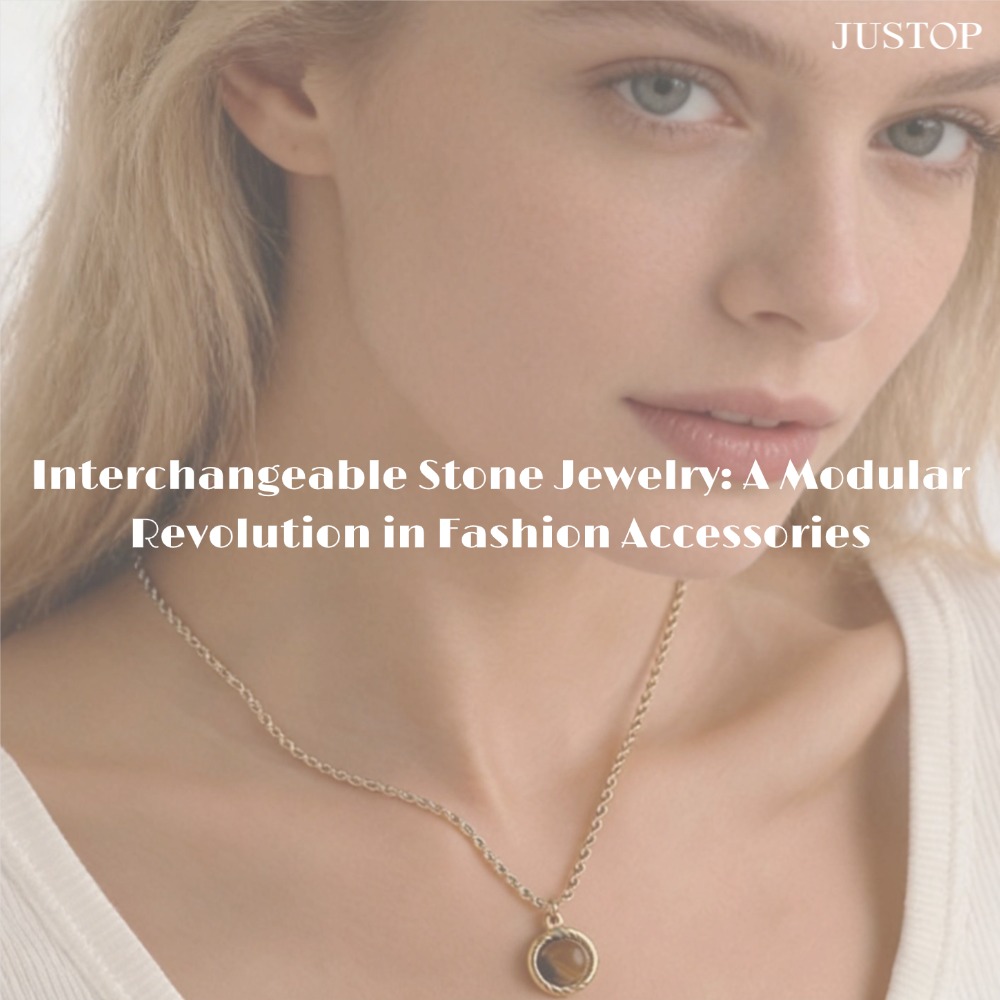
In today’s fashion jewelry market, versatility and personalization are more important than ever. One of the most forward-thinking concepts gaining traction is interchangeable stone jewelry—a modular design approach that allows natural stones to be removed and replaced within a standardized metal frame. Often associated with customizable jewelry, modular jewelry design, and interchangeable pendant necklaces, this concept blends functionality with creativity.
For brands, it means one base structure paired with multiple gemstone options, reducing inventory pressure while expanding SKU possibilities. For consumers, it offers freedom—the ability to switch stones according to mood, outfit, or occasion.
Design Inspiration: Architecture and Modular Thinking
The logic behind interchangeable stone jewelry originates outside the fashion world.
In modern architecture, stone curtain walls are installed using dry-hanging systems. Each stone panel is secured with metal anchors, allowing individual replacement without dismantling the entire façade. The same principle applies at a smaller scale in jewelry: a durable metal jewelry setting acts as the structural framework, while the natural stone functions as a removable module.
This modular mindset is also reflected in contemporary furniture design. Dutch designer Remi Reniers is known for combining standardized steel connectors with uniquely shaped natural stone fragments. The philosophy is clear—use a consistent metal system to adapt to non-uniform materials, celebrating individuality within structure.
Structural Solutions in Interchangeable Jewelry
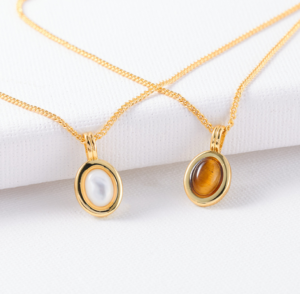
Transforming this idea into wearable natural stone jewelry requires precise engineering. Several mechanisms can be used:
Snap-In or Clip Frames
C-shaped or U-shaped metal frames with slight elasticity allow grooved stones to click into place. This tool-free design is ideal for pendant necklaces and dangle earrings, supporting fast and easy changes.
Screw-Lock Mechanisms
Two-part settings secure the gemstone with micro screws from the side or back. This structure ensures maximum stability, making it suitable for statement rings, brooches, and heavier stones.
Magnetic Settings
Hidden micro-magnets inside the frame connect to a thin metal plate attached to the stone. This approach creates a clean aesthetic, commonly used in lightweight interchangeable earrings or minimalist pendants.
Spring-Pin Systems
Inspired by watch strap mechanisms, spring-loaded pins lock into small positioning holes in the gemstone. This durable solution works well for modular bracelets and linked necklace segments.
Materials for Frame and Stone
Material selection defines both durability and market positioning.
Common frame materials include:
- Sterling silver jewelry (S925) for mid- to high-end collections
- Gold plated brass jewelry for trend-driven affordability
- Stainless steel jewelry for strength and corrosion resistance
- Titanium for lightweight structural flexibility
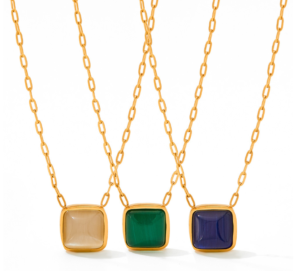
For interchangeable stones, widely searched semi-precious stone jewelry options include tiger’s eye, lapis lazuli, turquoise, agate, moonstone, and labradorite. These stones offer distinctive color patterns and accessible pricing, enabling diverse SKU combinations.
Redefining Consumer Interaction
Interchangeable stone jewelry transforms accessories into interactive objects. A single metal frame paired with multiple natural stones allows endless styling possibilities while maintaining manufacturing efficiency.
As shoppers increasingly look for custom jewelry, personalized fashion jewelry, and interchangeable pendants, modular stone systems provide both emotional engagement and scalable business strategy. It is architectural logic translated into wearable design—flexible, efficient, and endlessly adaptable.