
Why Jewelry Plating and Metal Selection Matter in Jewelry Design
In modern jewelry design, color is not only a decorative element but also an important factor that defines style, positioning, and consumer appeal. Jewelry plating allows designers to transform ordinary metal surfaces into luxurious gold tones, modern silver finishes, or unique artistic colors. However, achieving the ideal appearance requires a good understanding of the relationship between metal materials and plating techniques.
For designers, choosing the right base metal and finish can influence the overall style, durability, production cost, and market positioning of a jewelry collection. Understanding the jewelry plating process helps designers create products that are not only visually attractive but also suitable for different wearing scenarios.
Exploring Different Jewelry Plating Colors and Design Effects
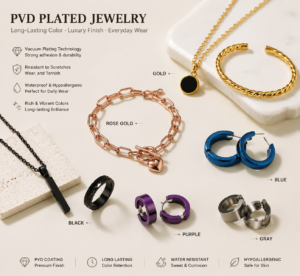
Color selection is one of the most important decisions in jewelry development. Among popular metal plating colors, gold shades remain timeless choices. From classic yellow gold and champagne gold to elegant rose gold, these finishes can create different style expressions, from luxury and sophistication to youthful fashion.
Gold plating jewelry has become a popular option for fashion accessories because it provides the appearance of precious metals while maintaining design flexibility. Through different techniques in the gold plating process, designers can achieve various shades, including 18K gold, 14K gold, and vintage-inspired gold effects.
For minimalist and contemporary designs, cool-tone finishes are widely used. Silver plating jewelry creates a clean and modern appearance, while rhodium plating jewelry offers a bright white finish with a premium look. Designers who prefer bold and edgy styles can explore darker finishes such as black plating jewelry, which adds a mysterious and industrial feeling to jewelry collections.
PVD Technology: A New Choice for Modern Jewelry Design
As jewelry trends continue to evolve, designers are looking for finishes that combine creativity with durability. PVD coating jewelry has become increasingly popular, especially for stainless steel jewelry designs.
The PVD coating process uses a vacuum environment to deposit a thin and durable metal layer onto the surface. Compared with traditional finishing methods, it provides better resistance to wear, making it suitable for everyday jewelry pieces such as rings, bracelets, and necklaces.
For stainless steel designs, stainless steel PVD coating offers a wider range of creative possibilities. Besides classic gold and rose gold, designers can explore black, blue, titanium, and other modern finishes to create distinctive collections.
Selecting the Right Base Metal for Jewelry Concepts
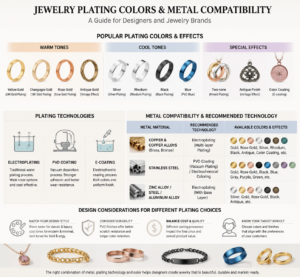
Different metals provide different design advantages. Copper and brass are highly versatile materials that work well with many traditional plating techniques. They are suitable for designers who want to explore vintage styles, antique effects, and a wide variety of colors.
Stainless steel is often chosen for its strength, durability, and modern appearance. However, because of its surface characteristics, designers need to consider suitable finishing methods such as PVD or specialized treatments.
Zinc alloy, aluminum, and other metals can also achieve attractive finishes when properly prepared. These material choices are an important part of the overall jewelry manufacturing process, influencing both the appearance and performance of the final product.
Creating Better Jewelry Designs Through Surface Innovation
Modern jewelry finishing techniques provide designers with more creative freedom than ever before. From traditional electroplating jewelry methods to advanced vacuum plating jewelry technology, different finishes can help bring unique design concepts to life.
Whether creating luxury-inspired collections, everyday fashion jewelry, or trend-focused accessories, understanding material and color compatibility allows designers to make better choices. The right combination of metal, plating color, and finishing technology can enhance both the visual appeal and long-term value of a jewelry piece.