
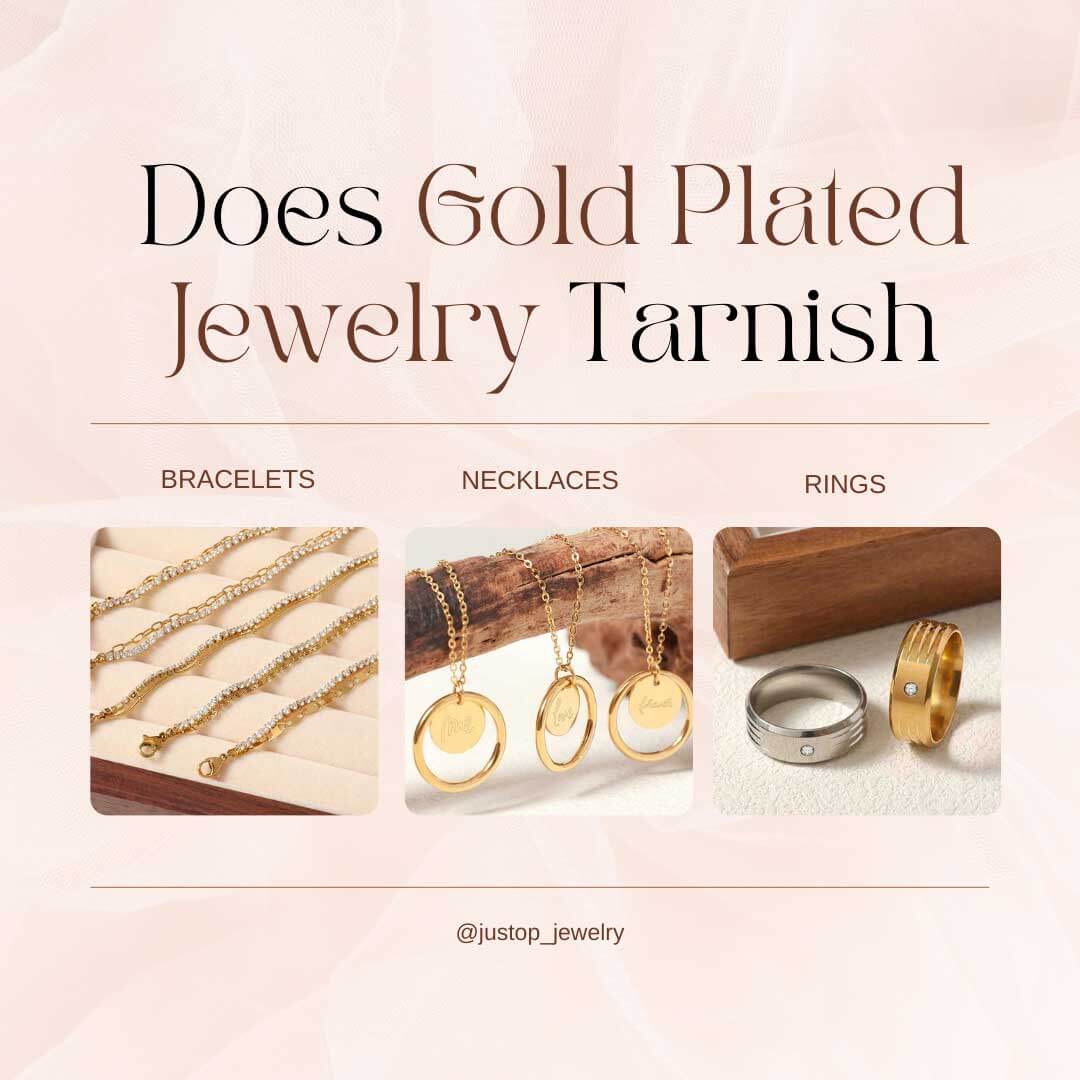
In the glittering realm of jewelry, gold plated pieces hold a special allure with their radiant finish and accessible price point. However, one persistent question casts a shadow over their luster: does gold plated jewelry tarnish? We’re about to embark on an enlightening journey into the heart of gold plating, drawing on the wisdom of industry experts to demystify the durability of these beloved adornments.
Gold plated jewelry does indeed carry the risk of tarnishing over time. The underlying base metal, typically brass or copper, can become exposed as the gold layer wears away, leading to discoloration. But fret not, for this isn’t a foregone conclusion. I will share four professional tips that can help you preserve the shine and delay the onset of tarnish, ensuring your gold plated jewelry continues to dazzle.
 What Is Gold-Plated Jewelry?
Gold-plated jewelry is crafted by electroplating a thin layer of gold over a base metal such as stainless steel or brass. The thickness of the gold layer, measured in microns, significantly impacts the durability and tarnish-resistance of the jewelry. As Gretel Going of Fortune & Frame points out, the thicker the gold plating, the less susceptible it is to tarnishing.
Why Does Gold-Plated Jewelry Tarnish?
The core reason for tarnishing lies in the exposure of the base metal as the gold layer fades from wear and tear. This exposure leads to a chemical reaction between the metal and environmental factors, which can darken or discolor the jewelry. But with the right care, including regular polishing and maintenance, this process can be slowed down considerably.
Clean Jewelry Regularly
The key to maintaining the brilliance of your gold plated jewelry is regular cleaning. Recommends using a soft, lint-free cloth for cleaning. Cleaning at least once a year, or every three to six months for pieces you wear often, can make a significant difference. Avoid polishing cloths that are too abrasive, as they can strip the gold layer.
Avoid Contact With Water
Water is an enemy of gold plated jewelry, as it can accelerate tarnishing. Chlorine, saltwater, and even soap can damage the plating. It’s wise to remove gold plated pieces before showering or swimming, and to apply them after using beauty products.
Be Mindful with Perfume
Perfumes and other chemicals can react with gold plating, leading to tarnishing or discoloration. Recommends avoiding direct application of perfume on gold plated or even solid gold jewelry.
Store Gold-Plated Jewelry Strategically
Proper storage is crucial. Experts suggest keeping your jewelry in a pouch, case, or jewelry box, away from humidity and extreme temperatures. Keeping pieces separate can also prevent scratches or chips that could compromise the gold layer, as noted by Glassman.
Whilst gold plated jewelry can indeed tarnish, understanding the reasons and adopting expert care tips can greatly extend the life and beauty of your pieces. Should you seek further guidance or wish to expand your collection with high-quality gold plated jewelry, please reach out. Our selection is curated with longevity in mind, and we’re always here to assist you in choosing pieces that shine brilliantly, today and always.