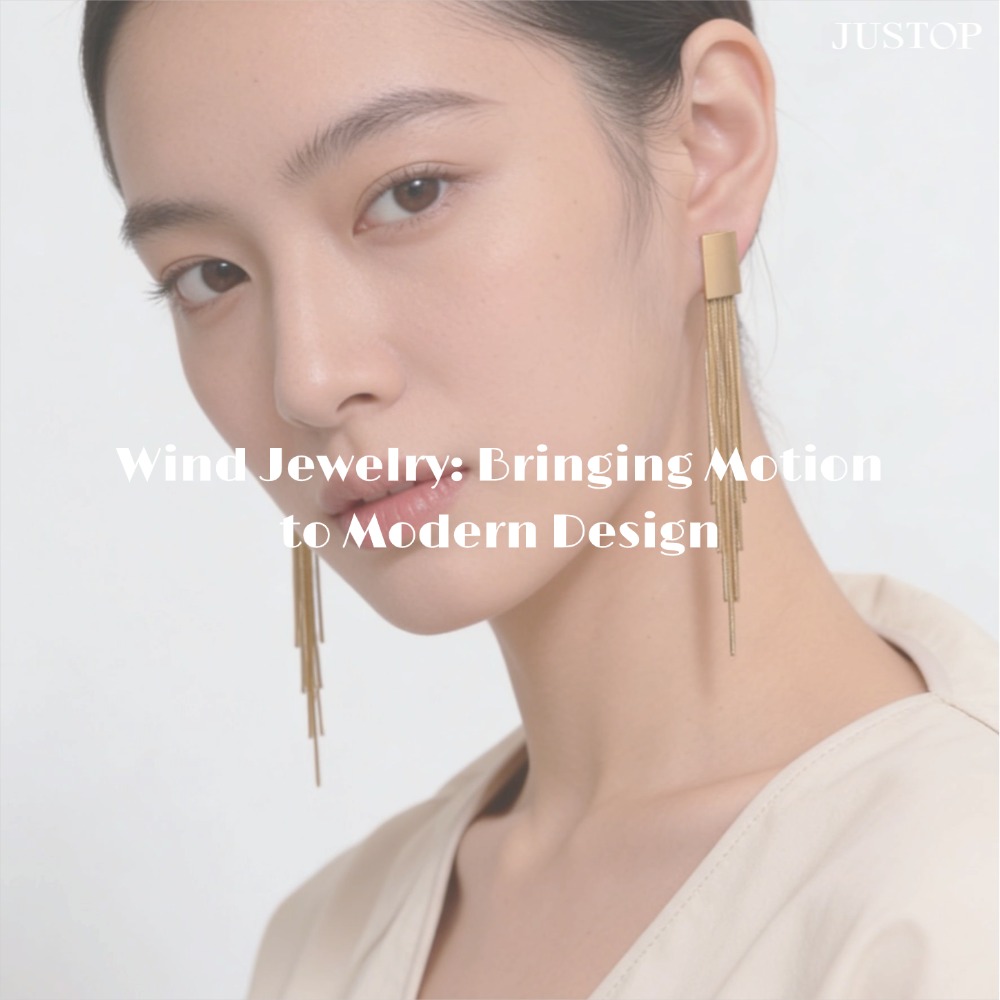
In today’s fine jewelry and designer jewelry market, one emerging direction focuses on capturing movement and lightness. Instead of static forms, wind jewelry explores motion through kinetic jewelry, dangle earrings, tassel necklaces, and movable pendant necklaces. These designs transform rigid metal and gemstones into pieces that shimmer and respond to the wearer’s slightest movement.
Inspired by Nature: The Beauty of Air in Motion
Translating Natural Movement
The concept behind wind jewelry begins with observation—leaves swaying in a breeze, petals trembling, water rippling, or kites drifting across the sky. Designers aim to capture not the literal shape of these elements, but their dynamic rhythm.
The French high jewelry house Van Cleef & Arpels beautifully expresses this idea in its Cerfs-Volants creations, inspired by kites floating in the wind. Through transformable rings and detachable brooches, the brand evokes suspension and airiness, reinforcing its position in the world of luxury jewelry and statement jewelry.
Taiwan-based JADEGIA interprets wind through jade and flowing tassels. Layered gemstones and delicate drop elements create gentle movement, similar to spring leaves stirred by air. This approach resonates strongly with the growing demand for tassel earrings and floating necklace styles in global markets.
The Heritage of Moving Jewelry
Long before modern engineering, 18th-century France introduced the “En tremblant” technique, meaning “trembling.” Jewelers developed fine spring mechanisms that allowed floral brooches to quiver naturally with motion.
Belgian brand MONETA continues this tradition by incorporating subtle spring structures into butterfly jewelry designs. When worn, the wings gently vibrate, exemplifying what we now call movable jewelry or kinetic fine jewelry. This historical craft remains the foundation of many contemporary wind jewelry designs.
Engineering the Illusion of Wind
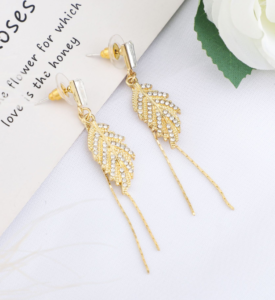
Micro-Mechanisms and Flexible Structures
Modern wind jewelry often integrates hidden hinges, articulated joints, or suspended stone settings. These allow central gemstones to shift slightly, reflecting light from multiple angles and increasing brilliance. Such movable stone settings are especially popular in high-end diamond pendant and gold necklace designs.
Renowned jewelry artist Cindy Chao demonstrates how material innovation enhances movement. Her feather brooches use titanium—extremely strong yet lightweight—to achieve realistic flexibility. Even when set with numerous gemstones, the pieces remain light enough to respond to subtle body motion.
Lightweight Materials and 3D Precision
To maintain comfort and sensitivity to motion, designers select lighter materials such as titanium, mother-of-pearl, opal, and turquoise. Advanced 3D jewelry design and precision casting allow for ultra-thin frameworks that balance durability with elegance.
Surface finishing techniques—polished, matte, or textured—enhance visual contrast, amplifying the effect of light and shadow as the jewelry moves.
More Than Decoration
Wind jewelry is not just about aesthetics—it is about interaction. Through dangle earrings, drop necklaces, and statement brooches, designers create pieces that shimmer and respond to life in motion.
By transforming invisible air into visible movement, wind jewelry captures vitality itself—turning fleeting natural energy into wearable art.