In the evolving world of interactive jewelry, thermochromic pieces—often known as color changing jewelry or mood jewelry—bring movement and emotion into metal. By using heat-sensitive coatings or thermochromic resin, these designs shift color in response to body temperature or environmental changes. The result is a wearable object that feels alive, responsive, and deeply personal.
The Origins: From Mood Ring to Modern Innovation
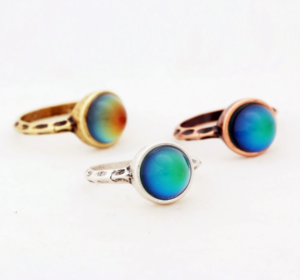
The story of mood ring jewelry began in the 1970s, when inventor Marvin Wernick introduced the first Mood Ring, inspired by liquid crystal thermometers. Marketed as a way to reflect emotional states through shifting colors—blue for calm, green for active, amber for excited—it quickly became a cultural phenomenon.
What made it revolutionary was the blending of psychology and physics. Changes in blood flow slightly alter skin temperature, which in turn affects the liquid crystals embedded in the stone. Though the emotional claims were playful, the science behind the color shift was real.
Today, the concept has evolved far beyond novelty rings. Designers now integrate thermochromic coating, heat sensitive resin jewelry, and advanced pigment technology into contemporary metal forms, creating minimalist rings, pendants, and earrings that subtly transform throughout the day.
How Thermochromic Jewelry Is Made
1. Core Materials
Modern temperature sensitive jewelry relies mainly on two technologies:
- Liquid Crystals:
These reflect different wavelengths of light as their molecular structure shifts with temperature. They produce smooth, rainbow-like transitions but require protective sealing. - Thermochromic Pigments:
Microencapsulated organic compounds that change or fade color at specific temperatures (for example, above 30°C / 86°F). They are more durable and suitable for large-scale production.
2. Design Applications
Thermochromic materials appear in jewelry through several methods:
Stone Inlay (Mood Stone):
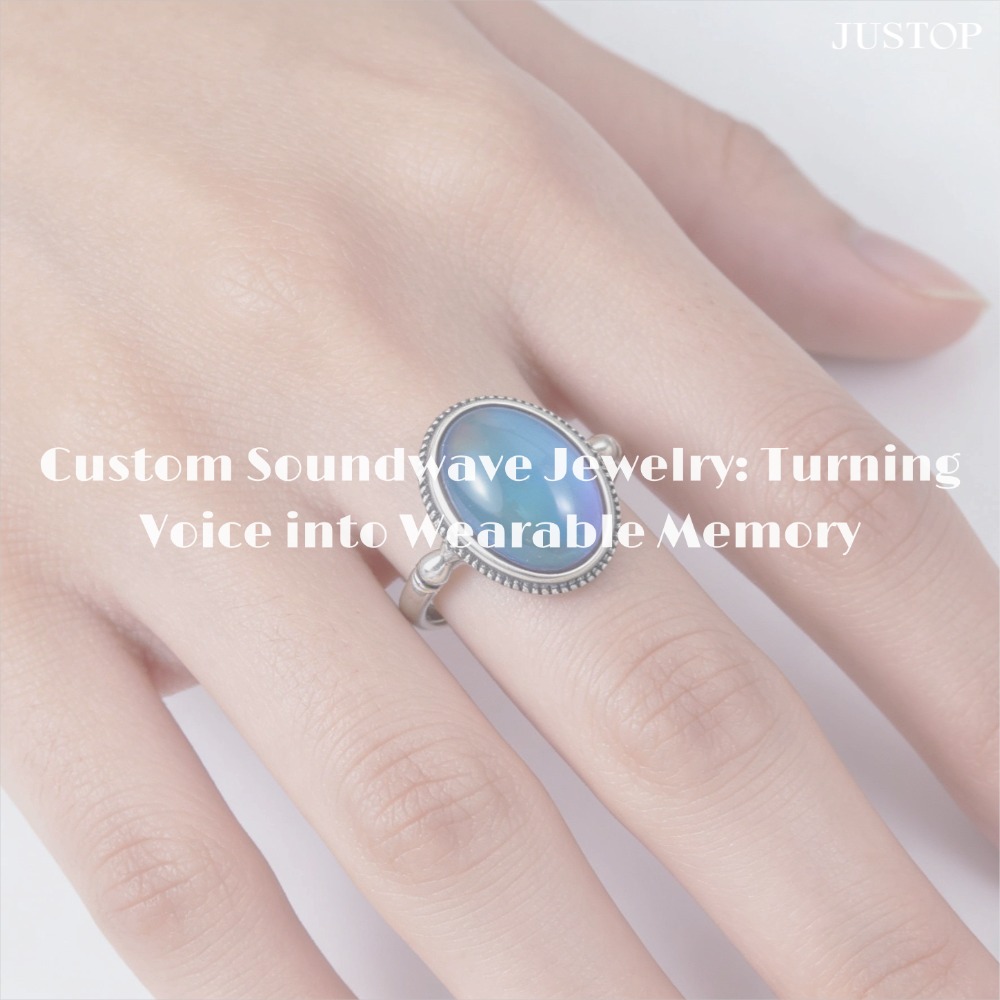
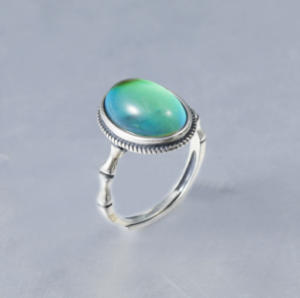
The classic format—heat-sensitive material sealed under glass or resin and set into a metal frame.
Surface Coating:
A thermochromic paint layer is sprayed or dipped onto stainless steel, silver, or brass. This technique allows full-surface color transitions.
Solid Resin Casting:
Entire components are formed from color-changing resin using casting or 3D printing. This is popular in experimental and artistic jewelry collections.
Metal Oxidation (No Coating):
Some metals change color when heated due to oxidation layers. Swiss brand De Bethune is known for oxidizing titanium to create deep blue finishes in its watches. Similarly, Cartier and Montblanc have applied controlled heat oxidation techniques in high-end watchmaking, demonstrating how metal itself can become a color-shifting canvas.
Why Consumers Love Color Changing Jewelry
Search trends for terms like mood ring meaning, color changing necklace, and heat activated jewelry show consistent interest. The appeal lies in three factors:
- Emotional Expression: It feels personal and interactive.
- Visual Surprise: The color transition creates subtle drama.
- Fusion of Tech and Fashion: It reflects innovation without sacrificing wearability.
In an age where customization and sensory experience drive design, thermochromic jewelry stands at the intersection of science and storytelling.
It is not just decoration.
It reacts, responds, and reveals.