
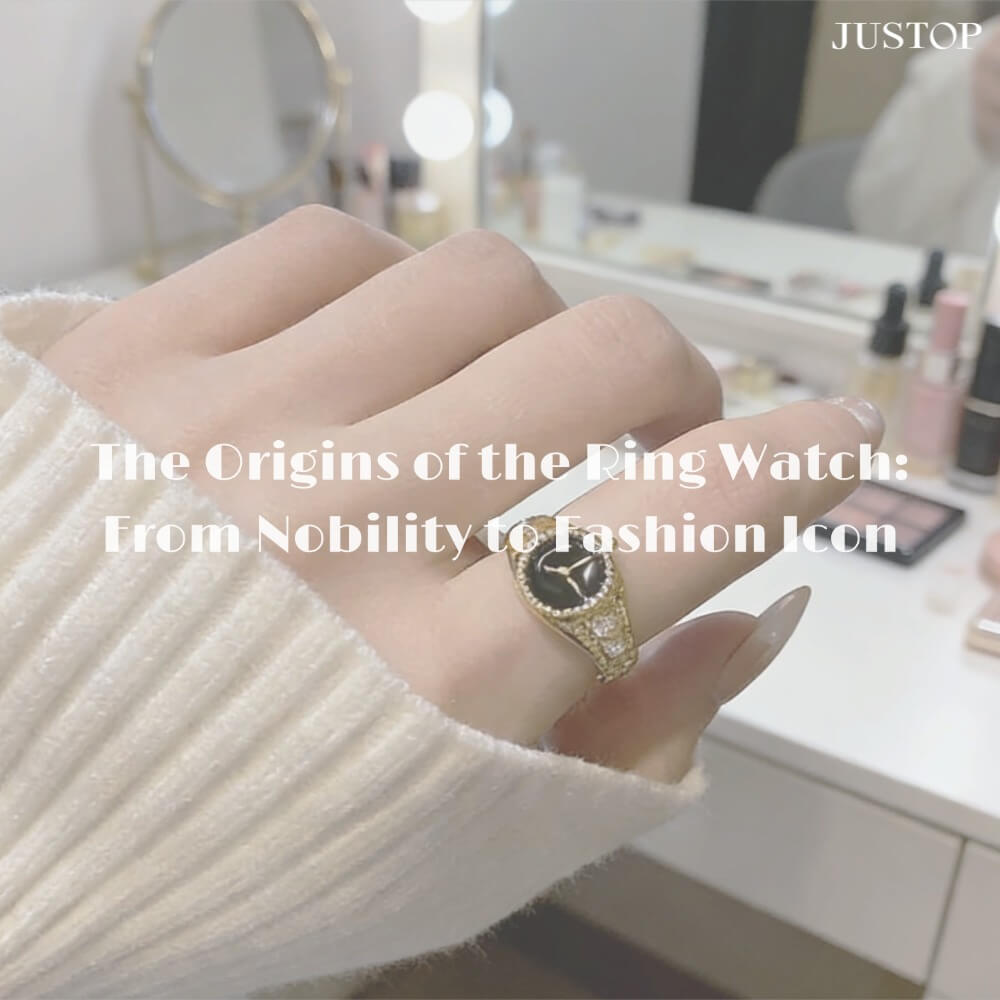
The ring watch, sometimes also called a finger watch or ring clock, is not a modern invention. Its earliest form can be traced back to late medieval Europe and the Renaissance period, roughly between the 15th and 17th centuries. During this time, European royalty and aristocrats favored miniature timepieces worn as rings, combining luxury jewelry with mechanical innovation.
These early examples, now considered antique ring watch designs, were typically crafted in gold and enamel, often featuring a hinged cover that concealed a tiny dial and moving hands. Much like pocket watches, they served both a practical function and a strong symbolic role, representing wealth, education, and social status.
Do Ring Watches Actually Tell Time?
Whether a ring watch works as a real timepiece depends entirely on its design and market positioning. Functional versions do exist, usually found among high-end jewelry houses, antique reproductions, or independent designer brands. These pieces contain ultra-miniature mechanical or quartz movements and are true miniature watch ring creations. However, due to the complexity and craftsmanship involved, they are extremely rare and expensive.
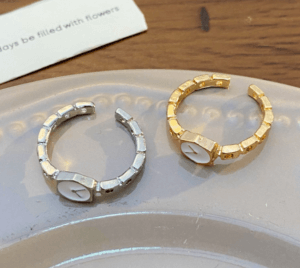
In contrast, the vast majority of ring watches on today’s market are decorative. These ring watch jewelry pieces feature fixed hands and non-moving dials, using the visual language of timepieces purely as an aesthetic element. This decorative approach dominates fast fashion and trend-driven jewelry, where the focus is self-expression rather than function.
Global Popularity and Style Movements
Ring watches enjoy global appeal, but they are particularly popular in East Asia. In Japan, South Korea, and China, the ring watch for women is often styled as part of layered ring looks, aligning perfectly with local preferences for delicate yet expressive accessories.
In North America and Europe, the ring watch is closely tied to retro and subcultural fashion. Styles such as the vintage ring watch and steampunk ring watch are especially popular among fans of gothic, bohemian, and alternative aesthetics. Social media platforms like Instagram, TikTok, and Pinterest have further accelerated the global revival of this design.
Materials Used in Modern Ring Watches
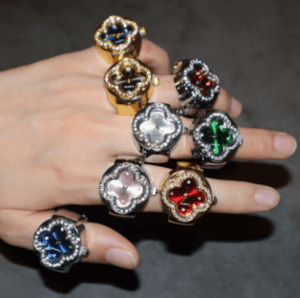
Materials vary widely depending on price point. Fashion-oriented designs typically use alloy, brass, or stainless steel ring watch bases, often finished with gold plating or vintage-style treatments. These materials offer durability and affordability, making them ideal for large-scale production.
Mid-range designs may use silver ring watch constructions, titanium, or decorative elements such as mother-of-pearl or semi-precious stones. At the top end, collector-level pieces still rely on precious metals and gemstones, preserving the legacy of historic ring watches.
A Fashion Statement with Wholesale Potential
Today’s ring watch is best understood as a fusion of historical inspiration and modern street style. Decorative designs dominate the market, offering strong visual impact, trend relevance, and commercial viability. For brands and retailers, ring watch wholesale programs provide an opportunity to tap into Y2K revival trends, vintage aesthetics, and global demand for statement jewelry.
From symbolic timepieces to bold fashion accessories, the ring watch continues to evolve—proving that time, when worn on a finger, never goes out of style.