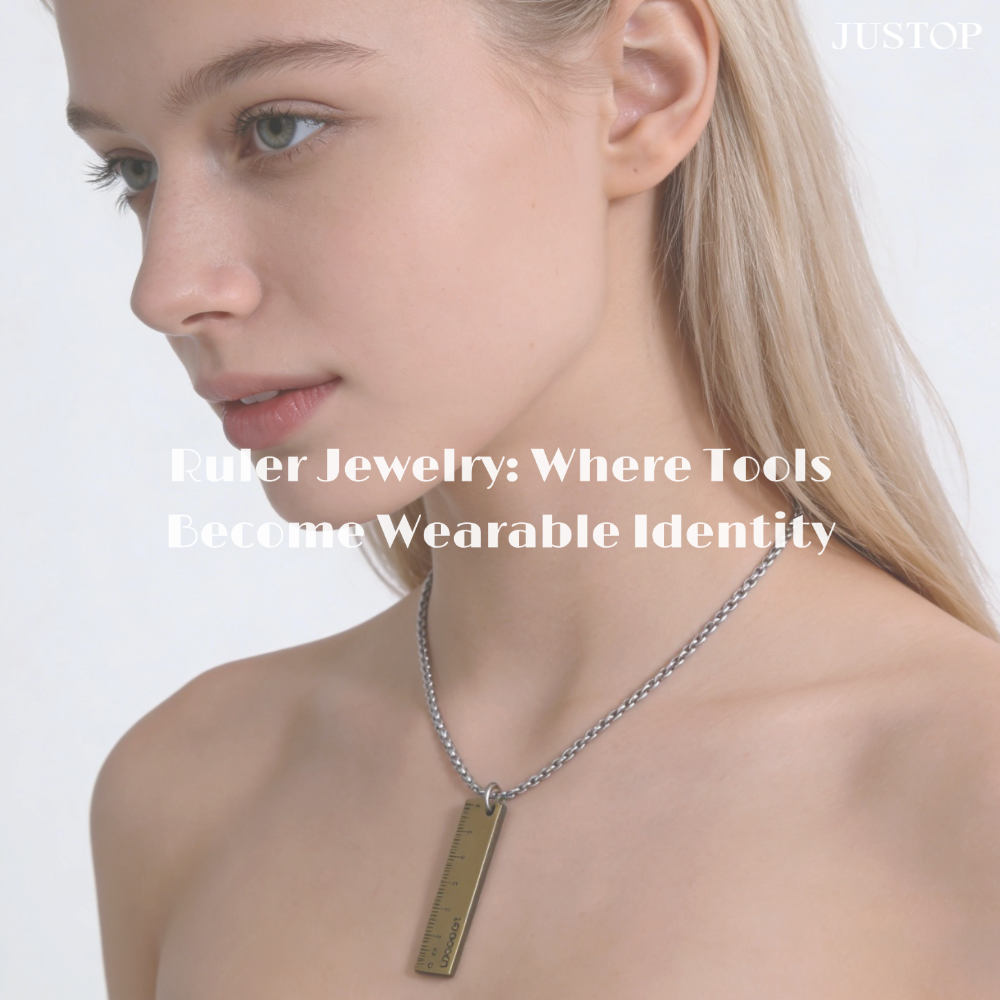
In recent years, ruler jewelry has emerged as a distinctive form of adornment that goes far beyond decoration. Rooted in craftsmanship, creativity, and professional identity, this niche category transforms everyday measuring tools into meaningful personal symbols. From a delicate ruler necklace to a charming tape measure necklace, these pieces speak directly to creators who see beauty in precision and process.
Origins: Craftsmanship and the Power of Symbols
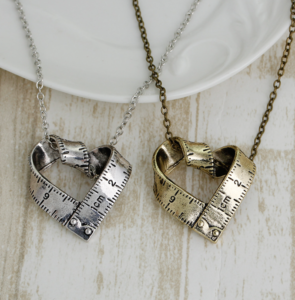
The rise of ruler jewelry is closely tied to a broader cultural appreciation for making, building, and creating by hand. As part of the growing maker jewelry movement, designers draw inspiration from tools that represent patience, accuracy, and dedication. For tailors, architects, artists, and designers, a ruler or tape measure is not just an object—it is a companion in the act of creation.
This is why ruler jewelry functions as deeply symbolic jewelry. It serves as a “wearable conversation starter,” allowing the wearer to express professional pride, personal philosophy, or a love for handmade culture. In this sense, ruler jewelry naturally fits into the world of statement jewelry and concept jewelry, where meaning matters as much as appearance.
A Niche Market with Global Appeal
Rather than mass-market fashion, ruler jewelry belongs firmly among niche jewelry brands. It thrives on platforms that celebrate individuality and storytelling, especially Etsy jewelry, Instagram, and Pinterest. Here, independent jewelry designers and small studios showcase unique handmade jewelry that resonates with specific communities.
These pieces are often purchased as meaningful gifts, creative milestones, or personal rewards. Their emotional value and narrative depth allow them to command higher perceived worth than conventional accessories, reinforcing their place within the wearable art jewelry category.
Who Wears Ruler Jewelry?
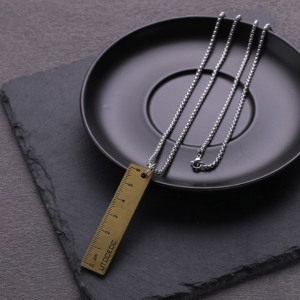
The core audience includes professionals and creatives seeking jewelry for designers, jewelry for artists, and other forms of craftsman jewelry. DIY enthusiasts and hobbyists also embrace these designs as markers of identity. Beyond professionals, many wearers are drawn to the symbolism—measuring one’s life, finding balance, or shaping one’s own path.
Vintage-inspired versions, often made from brass or bronze, appeal strongly to fans of industrial style jewelry, while cleaner interpretations align with minimalist jewelry design aesthetics.
Materials and Making: From Tool to Treasure
Most ruler jewelry is produced as handmade jewelry or artisan jewelry, with sterling silver being a favorite for its detail and wearability. Brass, stainless steel, and gold-filled options add variety, while colorful accents appear in enamel jewelry. In higher-end designs, gemstones may be set along measurement markings, elevating the tool motif into fine jewelry territory.
Conclusion: Jewelry for Creators
At its core, ruler jewelry celebrates the act of making. Whether worn as a ruler necklace or tape measure charm, it honors precision, creativity, and patience. For brands and designers, it offers a powerful opportunity to connect with creators by turning humble tools into lasting symbols of pride and passion.