In fashion jewelry, language is rarely used for reading. Instead, it is transformed into visual symbols that carry meaning, identity, and emotion. Certain writing systems appear far more frequently engraved, printed, or sculpted into jewelry—not because they are widely spoken, but because they perform exceptionally well as global visual codes. From Roman numerals to Chinese characters, these languages dominate jewelry design through symbolism rather than grammar.
Roman Numerals: The Universal Language of Time
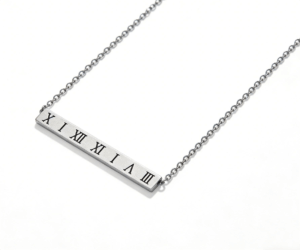
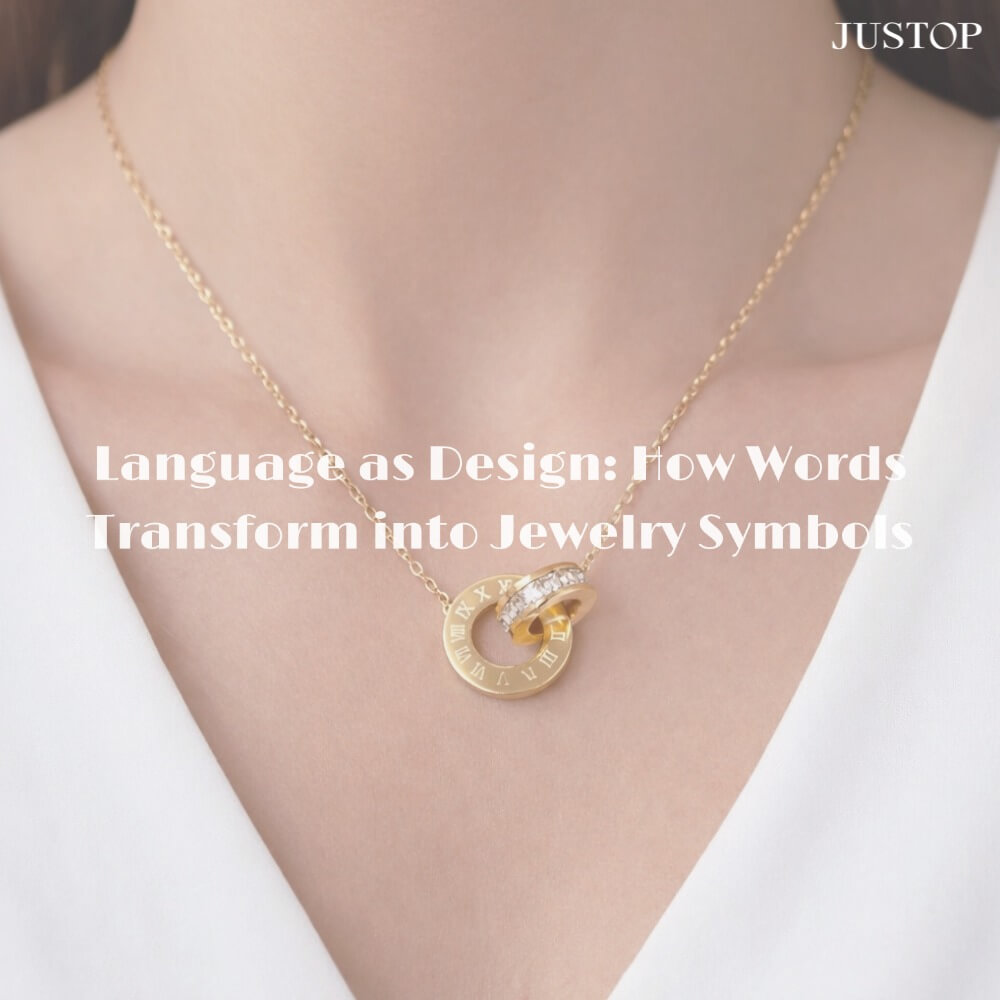
Among all systems, Roman numeral jewelry holds an unmatched position. Whether seen in a Roman numeral necklace or a Roman numeral ring, these symbols instantly evoke time, history, and permanence. Roman numerals are widely used to mark dates, anniversaries, or personal milestones, making them ideal for sentimental jewelry.
Their geometric clarity and ancient associations allow them to cross cultural boundaries effortlessly. Even without understanding their numeric value, most wearers recognize Roman numerals as markers of legacy and importance. This explains why they remain one of the most searched and enduring forms of symbolic jewelry worldwide.
Latin Letters: Personal Identity Made Visible
Modern personalization has elevated Latin letters—especially English—into a dominant design element. Pieces like the initial necklace, letter pendant, and alphabet jewelry are now staples in global fashion markets.
A single letter can represent a name, a loved one, or even a personal value. This simplicity is why name initial jewelry and personalized letter necklaces consistently perform well in both luxury and mass markets. Letters function less as language and more as identity icons, allowing wearers to communicate individuality without complexity.
Chinese Characters: Meaning in a Single Form
Unlike alphabet-based systems, Chinese is a logographic language, making it uniquely powerful in jewelry design. Chinese symbol jewelry and Chinese character necklaces often feature a single character—such as luck, love, or harmony—that conveys a complete idea on its own.
This ability to compress deep meaning into one visual unit explains the global appeal of Chinese lucky charm jewelry. Even for audiences unfamiliar with the language, the characters are perceived as artistic, balanced, and culturally rich, functioning simultaneously as decoration and talisman.
Arabic Calligraphy and Spiritual Scripts
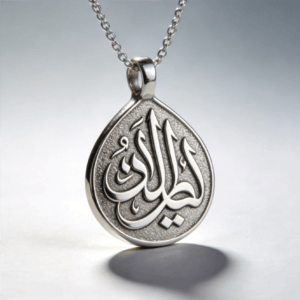
Another highly influential category is Arabic calligraphy jewelry. Flowing, rhythmic letterforms transform text into ornament, often seen in Arabic name necklaces or Islamic calligraphy jewelry. Here, the aesthetic value of the script is inseparable from its spiritual and cultural depth.
Similarly, Om symbol jewelry draws from Sanskrit traditions, representing spirituality and inner balance. These scripts thrive in jewelry because they are instantly associated with faith, mindfulness, and transcendence—universal concepts that resonate beyond language barriers.
Japanese, Hebrew, and Greek Symbols: Cultural Precision
Japanese kanji jewelry and Japanese symbol necklaces blend tradition with contemporary fashion, often tied to craftsmanship and pop culture. Hebrew name necklaces and Star of David jewelry carry strong identity and heritage significance, while Greek symbol jewelry references philosophy, knowledge, and classical wisdom.
Each of these scripts occupies a more specific niche, but their strength lies in clearly defined cultural symbolism.
Why Symbolic Languages Win in Jewelry
Across all these examples, one principle remains consistent: symbolic jewelry meaning matters more than linguistic comprehension. The most successful languages in fashion jewelry are those that can be reduced to powerful visual icons—simple, meaningful, and globally recognizable.
In this way, jewelry becomes not a sentence to read, but a symbol to feel.