How to Tell If Pearls Are Real: A Practical Identification Guide
Understanding Different Types of Pearl Beads
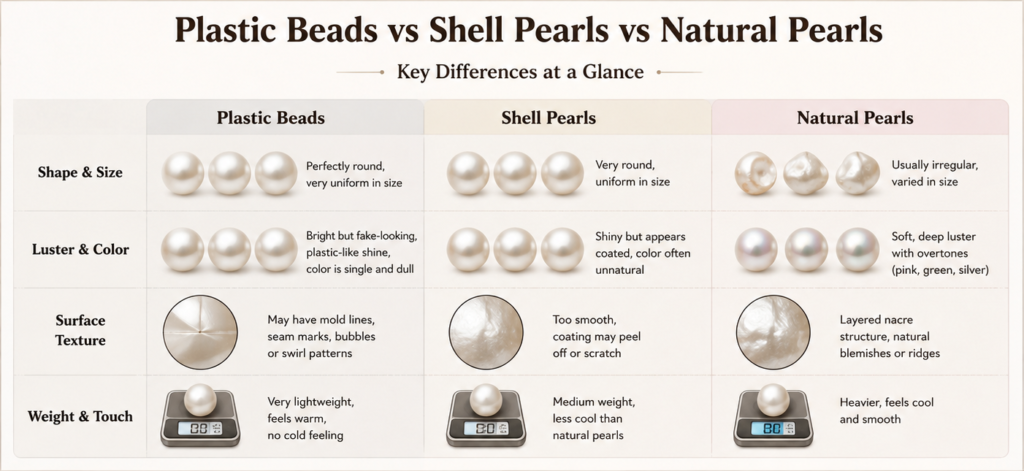
When learning how to tell if pearls are real, the first step is understanding the materials behind them. In the jewelry market, you’ll commonly encounter three main categories: natural pearls, shell pearls, and plastic beads.
Natural pearls are formed inside mollusks and are considered organic gemstones. In contrast, shell pearls are man-made—if you’ve ever wondered about the shell pearl meaning or what are shell pearls, they are typically created from crushed shell material and coated to imitate real pearls. Plastic beads, on the other hand, are fully synthetic and mass-produced at a low cost.
Knowing these distinctions is key when comparing real vs fake pearls, especially when visual similarities can be misleading.
Visual Clues: Shape, Luster, and Surface
A quick pearl quality check starts with observing shape and uniformity. Natural pearls rarely appear perfectly round, and slight variations in size and contour are normal. In comparison, shell pearls and plastic beads are usually identical in shape due to controlled manufacturing.
Luster is another defining factor. Natural pearls exhibit a soft, deep glow that appears to come from within, often showing subtle color overtones. Imitations tend to have a surface-level shine that looks either overly glossy or dull.
Touch and Weight: Subtle but Reliable Indicators
Natural pearls feel cool and slightly heavy when held. This tactile quality is often used in a basic genuine pearl test. Shell pearls may feel similar but are generally lighter, while plastic beads are noticeably lightweight and may feel warm to the touch.
These differences become more apparent when comparing a real pearl necklace vs fake side by side.
Simple At-Home Pearl Authenticity Test
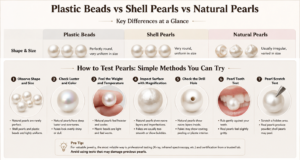
There are a few methods for a quick pearl authenticity test if you’re unsure:
- The pearl tooth test involves gently rubbing the pearl against your teeth. Real pearls feel slightly gritty, while fakes feel smooth.
- The pearl scratch test can reveal differences in surface layers—natural pearls produce fine powder, while coated shell pearls may peel.
These are common techniques used in how to test pearls at home, but they should be done carefully to avoid damage.
Final Thoughts: Choosing Authentic Pearl Jewelry
Understanding how to identify natural pearls doesn’t require expert tools, but it does require attention to detail. By evaluating shape, luster, weight, and texture, you can confidently distinguish a fake pearl vs real pearl in most cases.
For high-value purchases, however, professional certification is always recommended. Whether you’re buying for personal use or resale, knowing how to assess pearl authenticity ensures you invest in truly authentic pearl jewelry that meets both quality and value expectations.