How to Identify Different Jewelry Craft Techniques in Fashion Jewelry
Understanding the jewelry manufacturing process is essential for buyers, designers, and wholesalers who want to evaluate quality and craftsmanship. From shaping raw materials to adding final decorative details, each piece of jewelry goes through multiple stages. By breaking these stages down, you can better recognize the different jewelry making methods used in modern fashion jewelry manufacturing.
1. Forming Stage: The Foundation of Shape
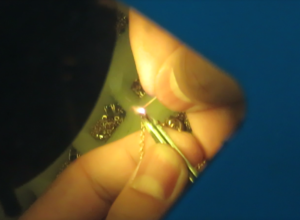
The first step in any jewelry piece is the forming stage, which determines its overall structure and silhouette. Common techniques include the jewelry casting process, stamping, electroforming, and even 3D printing.
For example, casting allows for complex and detailed designs, while stamping is more suitable for flat, uniform shapes. If a piece has intricate curves or sculptural depth, it is likely cast rather than stamped. Understanding this stage helps answer the question: What shape is this jewelry, and how was it formed?
2. Surface Treatment: Color and Texture
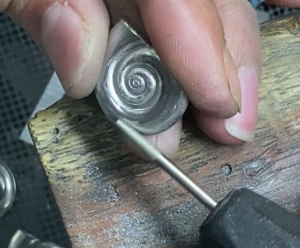
Once the base form is created, the piece undergoes surface finishing to enhance its appearance. This includes the jewelry plating process, polishing, brushing, and metal coloring.
For instance, gold-plated items often involve multiple plating layers to achieve a rich and durable finish. The difference between matte, glossy, or brushed surfaces can reveal the type of finishing technique used. This stage answers: What color and texture does the jewelry have?
3. Decoration Stage: Detail and Value
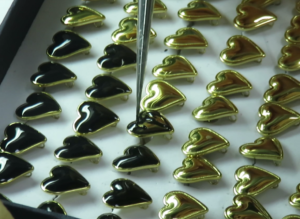
The final stage adds character and perceived value. This is where techniques like stone setting, enameling, and filigree come into play. Understanding different gemstone setting types is especially important.
Popular styles include pave setting jewelry, where small stones are closely set together for a continuous sparkle, as well as prong and bezel settings. If a piece features stones, it always involves a setting technique, which significantly impacts both aesthetics and durability.
4. Handmade vs Machine Production
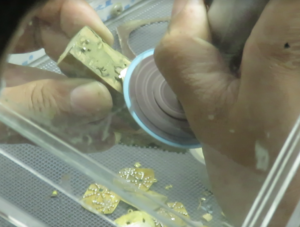
Another key way to distinguish craftsmanship is by comparing handmade vs machine made jewelry. Handmade pieces often show slight variations, subtle asymmetry, and unique textures, reflecting the artisan’s touch.
In contrast, machine-made jewelry tends to have perfect uniformity and high consistency, making it ideal for large-scale fashion jewelry manufacturing. Observing these differences helps identify whether a piece is mass-produced or handcrafted.
5. Material-Based Craft Differences
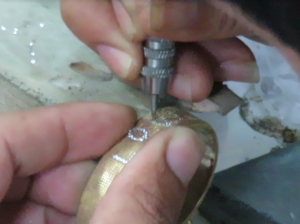
Materials also influence the techniques used. For example, comparing stainless steel vs brass jewelry reveals different processing paths. Stainless steel often requires advanced casting and polishing due to its hardness, while brass is more flexible and easier to shape and plate.
Additionally, the presence of gemstones automatically implies stone setting processes, while alternative materials like resin or enamel require specialized treatments.
Conclusion: A Simple Four-Step Approach
To identify jewelry craftsmanship, follow four steps: analyze the forming stage, examine surface treatment, observe decorative techniques, and evaluate production method and materials. By combining these perspectives, you can accurately decode the techniques behind any piece and better understand its quality and value.