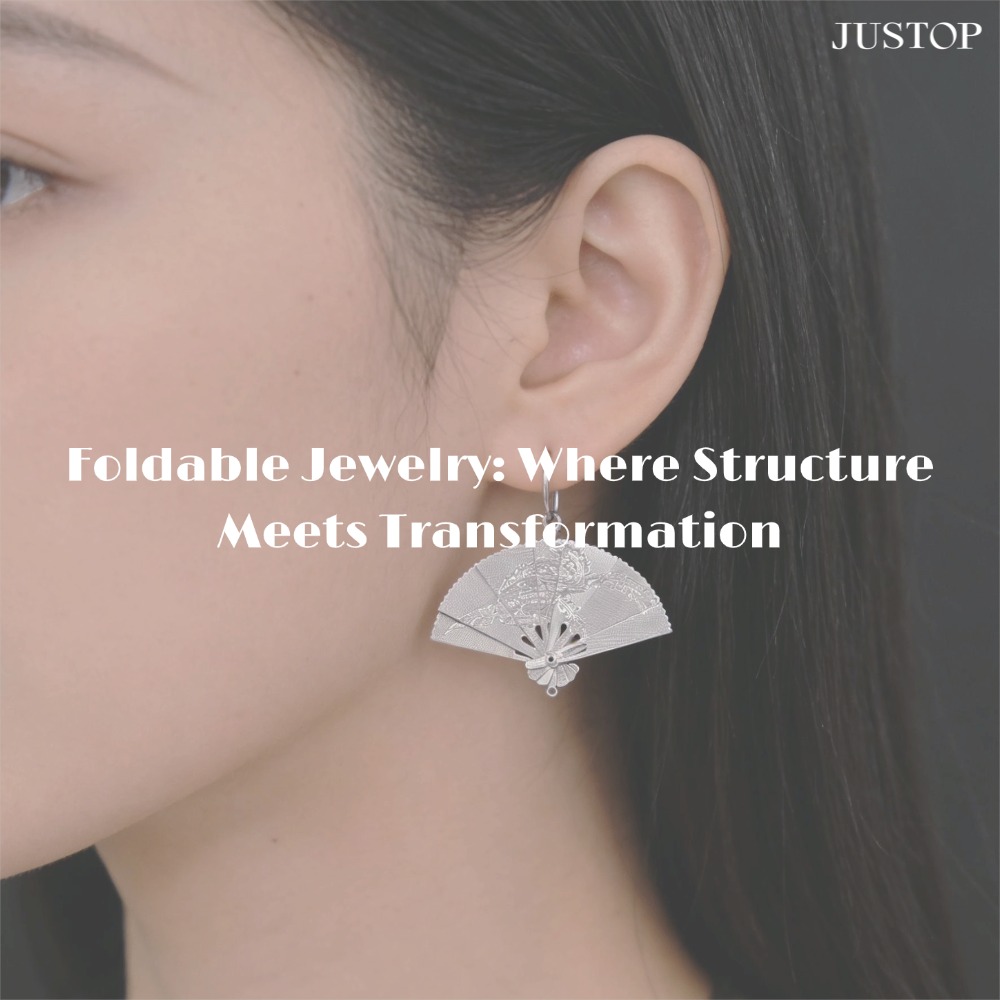
Foldable jewelry is redefining contemporary adornment by merging engineering, sculpture, and wearable design into one interactive form. Unlike traditional pieces that remain static, foldable jewelry transforms—expanding, collapsing, and shifting in volume through clever structural systems. Often described as transformable jewelry or kinetic jewelry, these designs combine aesthetic surprise with practical versatility, offering both artistic expression and space-saving functionality.
Design Origins: From Nature to Origami
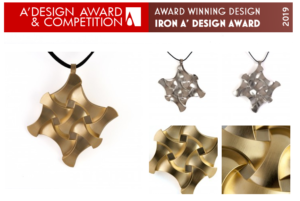
The creative foundation of foldable jewelry stems from two powerful influences: natural geometry and ancient craft traditions.
Nature’s Topological Forms
Nature is filled with efficient folding systems—curling leaves, layered petals, spiraled shells. Designers observe and abstract these organic structures into geometric expressions that feel alive and fluid.
For example, Monocircus draws inspiration from topological growth patterns found in plants. Pieces like the Sinuer Ring and Crispa Brooch reinterpret a single plane that twists and expands outward, creating intricate, organic silhouettes. Using advanced 3D printed jewelry techniques, the studio transforms nylon, stainless steel, and silver into complex fold-like structures that appear naturally grown rather than mechanically assembled.
The Influence of Origami
Origami—the art of turning a flat sheet into a three-dimensional form—deeply informs many jewelry designers. Beyond visual imitation, origami provides a structural logic: how can a rigid sheet of metal behave like paper?
Israeli designer Ilan Garibi is widely recognized for translating origami jewelry principles into metal. Through photochemical etching, he creates precise fold lines in flat sheets, enabling them to be hand-folded into geometric pendants such as Rounded Cubes. His work demonstrates how metal folding techniques can produce sculptural yet wearable forms.
Engineering the Fold: Materials and Mechanisms
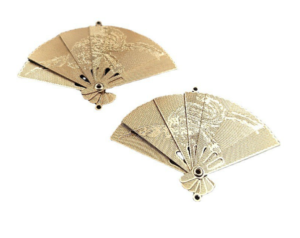
Transforming inspiration into functional, wearable pieces requires sophisticated material treatment and mechanical innovation.
Hinges, Segments, and Magnets
Mechanical solutions such as micro-hinges and magnetic closures enable shape transformation. Designer Arik Nemzer developed a patented system in which polygonal bases connect to triangular folding panels. Through hinges and internal magnets, the piece shifts between compact and expanded states—an elegant example of convertible jewelry design.
Segmented chain construction also solves durability challenges. Rigid chains are divided into articulated sections connected by hidden hinges, allowing safe folding without compromising visual continuity.
Metal Treatment and Hybrid Materials
Metal folding presents technical challenges. Repeated bending can cause hardening and fracture, making annealing essential.
Designer Valeria Buffa, in her “Folding Ourselves” series, emphasizes controlled annealing to maintain flexibility while sculpting silver into expressive folded forms. Her contrast between polished and matte finishes enhances depth and texture.
Material innovation also expands possibilities. British designer Kirstin Dunn explores transparency and light by combining metal with resin and lightweight plastics, creating ethereal folded earrings that blur the line between structure and softness.
Functional Aesthetics: Folding with Purpose
Foldable jewelry is not only decorative but functional.
American brand Goldstories integrates folding into the core structure of its Fold Collection. By designing pendants where chains pass directly through folded openings, the brand eliminates traditional clasps. Here, the fold becomes both structural and practical—an intelligent approach to minimalist jewelry design.
A Wearable Micro-Architecture
Ultimately, foldable jewelry feels like miniature architecture—interactive, sculptural, and dynamic. As demand grows for statement jewelry, modern jewelry design, and innovative jewelry concepts, folding techniques offer a compelling blend of art and engineering.
By combining origami logic, mechanical precision, and material experimentation, designers are reshaping what jewelry can be—not merely an ornament, but a transforming object filled with movement, surprise, and meaning.