
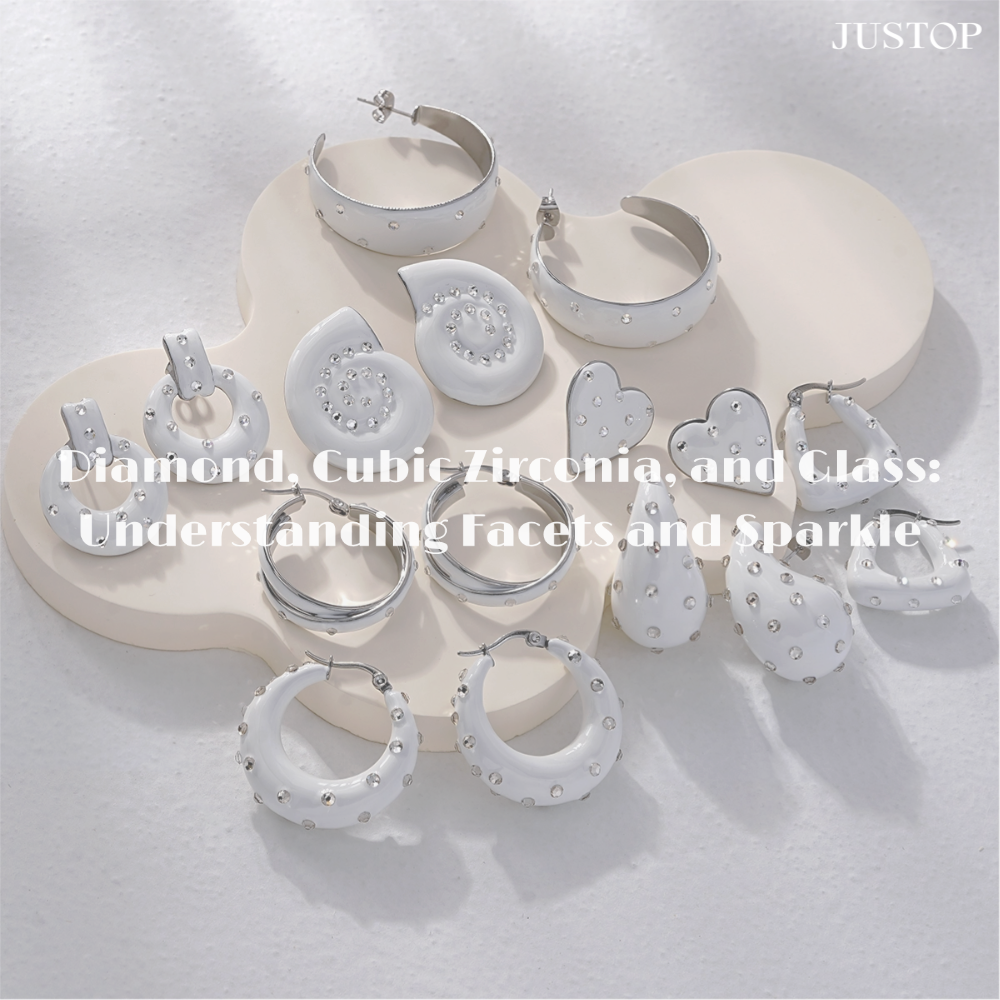
When comparing gemstones, sparkle alone can be misleading. The number of facets, cutting standards, and optical behavior all play a crucial role in how a stone performs. From natural diamonds to cubic zirconia and glass gemstones, the differences in gemstone faceting explain why they look similar at first glance—but very different upon closer inspection.
Diamond: Precision Cutting for Maximum Light Performance
A diamond’s beauty is not accidental. One of the most common questions consumers ask is how many facets does a diamond have. The answer lies in the round brilliant cut diamond, which typically features 57 or 58 facets. This configuration is the result of decades of optical research and is considered the benchmark for diamond cut quality.
Unlike clarity or color, cut is the most critical factor influencing diamond light performance. Each facet angle and proportion is precisely calculated to maximize internal reflection. When cut correctly—especially in an ideal cut diamond—light enters the stone, reflects internally, and exits through the crown, creating brilliance, fire, and scintillation.
This is why discussions around diamond cut vs clarity often emphasize that even a flawless diamond can appear dull if poorly cut. In short, diamond cutting is a science designed to serve light.
Cubic Zirconia: Designed to Imitate Diamond Sparkle

In a cubic zirconia vs diamond comparison, cubic zirconia (CZ) is one of the most convincing diamond simulants on the market. Like diamonds, CZ stones are often cut with 57 or 58 facets, closely copying the round brilliant structure.
The goal is visual similarity. However, the optical properties of gemstones reveal key differences. Cubic zirconia has higher dispersion, meaning cubic zirconia fire often appears stronger and more colorful—sometimes overly so. This leads to a bold cubic zirconia sparkle that can look less crisp than a diamond’s refined brilliance.
While CZ cutting standards are inspired by diamonds, tolerances are looser. This is why professionals can usually identify stones during a cz diamond comparison or explain how to tell diamond from cz under proper lighting.
Glass Gemstones: Flash Over Precision
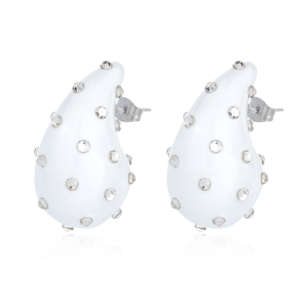
Glass gemstones, including rhinestones and other forms of glass crystal jewelry, are primarily designed for cost efficiency. Facet counts are highly variable—24, 32, or 48 facets are common—and there is no universal standard.
In a rhinestone vs diamond comparison, the difference is fundamental. Glass stones rely on shallow, broad facets and often use reflective foil backing to enhance brightness. Unlike diamonds or CZ, they do not depend on internal light refraction, making them classic imitation gemstones or simulated gemstones.
This approach prioritizes visible shine over precision, making glass a popular choice among affordable diamond alternatives.
Conclusion: Three Materials, Three Philosophies
Diamonds represent precision and optical engineering. Cubic zirconia offers a visually similar, accessible alternative. Glass focuses on surface sparkle and efficiency. Understanding facets and cutting philosophy is key to distinguishing fake diamond vs real diamond—and choosing the right stone for your needs.