Brutalist jewelry is more than a design style—it is a statement of power, authenticity, and individuality. Drawing inspiration from Brutalist architecture, this form of architectural jewelry translates concrete, mass, and structure into bold, wearable sculptures. The term “Brutalism” comes from the French béton brut, meaning “raw concrete,” a concept championed by modernist architect Le Corbusier.
Emerging in post–World War II Europe during the 1950s, Brutalist aesthetics rejected ornamentation in favor of exposed materials and structural honesty. Jewelry designers soon adopted this language, transforming the monumental qualities of architecture into statement jewelry that feels powerful, raw, and unapologetically expressive.
Defining Aesthetics of Brutalist Jewelry
Raw Texture Over Polish
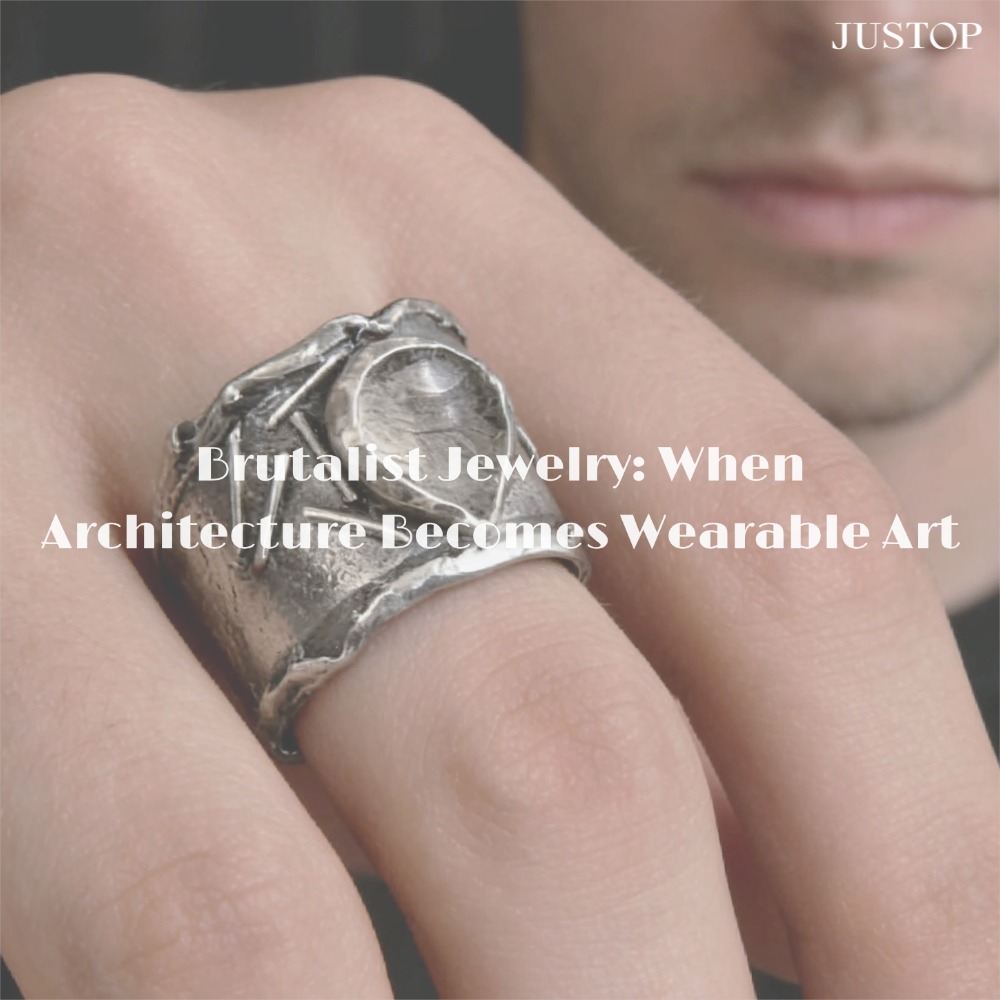
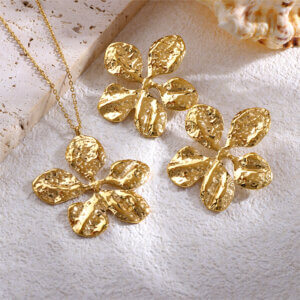
Unlike traditional fine jewelry, Brutalist jewelry celebrates imperfection. Hammer marks, molten surfaces, bark-like textures, and lunar roughness are deliberately preserved. Keywords like raw texture jewelry and handcrafted silver jewelry reflect the growing demand for this unrefined aesthetic.
Abstract Geometry
Sharp angles, modular repetition, and irregular compositions dominate sculptural jewelry designs. These pieces often evoke architectural components—pillars, slabs, and cantilevers—creating tension between order and chaos.
Uncut and Natural Gemstones
Instead of faceted brilliance, Brutalist designers favor raw gemstone jewelry. Stones such as amethyst, lapis lazuli, tiger’s eye, onyx, and quartz appear in their natural or minimally polished forms, reinforcing a sense of primal energy.
Iconic Brutalist Jewelry Forms
Sculptural Rings
Among the most searched items are brutalist rings and statement rings. These feature oversized geometric tops, stacked cubes, or spike-like forms. British designer Andrew Grima pioneered this category, creating dramatic rings admired by royalty and collectors alike.
Architectural Necklaces
Thick metal plates, articulated modules, and heavily textured pendants define architectural necklaces. Worn over minimalist clothing, they act as the visual anchor of an outfit.
Cuff Bracelets and Bangles
Wide, open cuffs embody Brutalism’s physical presence. Often oxidized or hammered, these brutalist bracelets pair especially well with modern, gender-neutral fashion.
Asymmetrical Earrings
Irregular, mismatched earrings—frequently searched as modern statement earrings—highlight Brutalism’s rejection of symmetry and convention.
Men’s Brutalist Jewelry
The movement’s masculine strength naturally lends itself to men’s statement jewelry, including bold rings, cuffs, and necklaces inspired by volcanic landscapes and industrial textures.
Materials That Speak the Truth
Brutalist jewelry favors honesty in materials. Silver is often oxidized, gold appears melted or textured, and brass and bronze are widely used for their earthy character. Designers also experiment with resin, plastic, and unconventional gemstone settings, pushing boundaries beyond traditional luxury norms.
Why Brutalist Jewelry Is Resurging
In an era dominated by perfection and mass production, Brutalist jewelry offers resistance. Its growing popularity in searches for avant-garde jewelry, bold jewelry designs, and wearable art jewelry reflects a cultural shift toward authenticity and self-expression.
Wearing Brutalist jewelry is not about subtlety—it is about presence. It is jewelry for those who enter a room and redefine it.