Silver jewelry has always been loved for its elegant shine and timeless style. However, many people experience problems such as tarnishing, scratches, and frequent maintenance after wearing silver pieces for a period of time. This is why rhodium plating has become one of the most popular finishing techniques in modern jewelry manufacturing, especially for high-quality silver jewelry.
What Is Rhodium Plating and Why Is It Used on Jewelry?
Many consumers ask what is rhodium plating and why it is widely used in the jewelry industry. Rhodium is a rare precious metal from the platinum family. Through the jewelry plating process, a thin layer of rhodium is applied to the surface of silver jewelry, creating a protective coating that improves durability, appearance, and resistance to oxidation.
Compared with untreated silver, rhodium plated jewelry offers a brighter white finish and a more luxurious appearance. It creates a mirror-like shine similar to platinum, making jewelry look more refined and premium.
Benefits of Rhodium Plating for Silver Jewelry
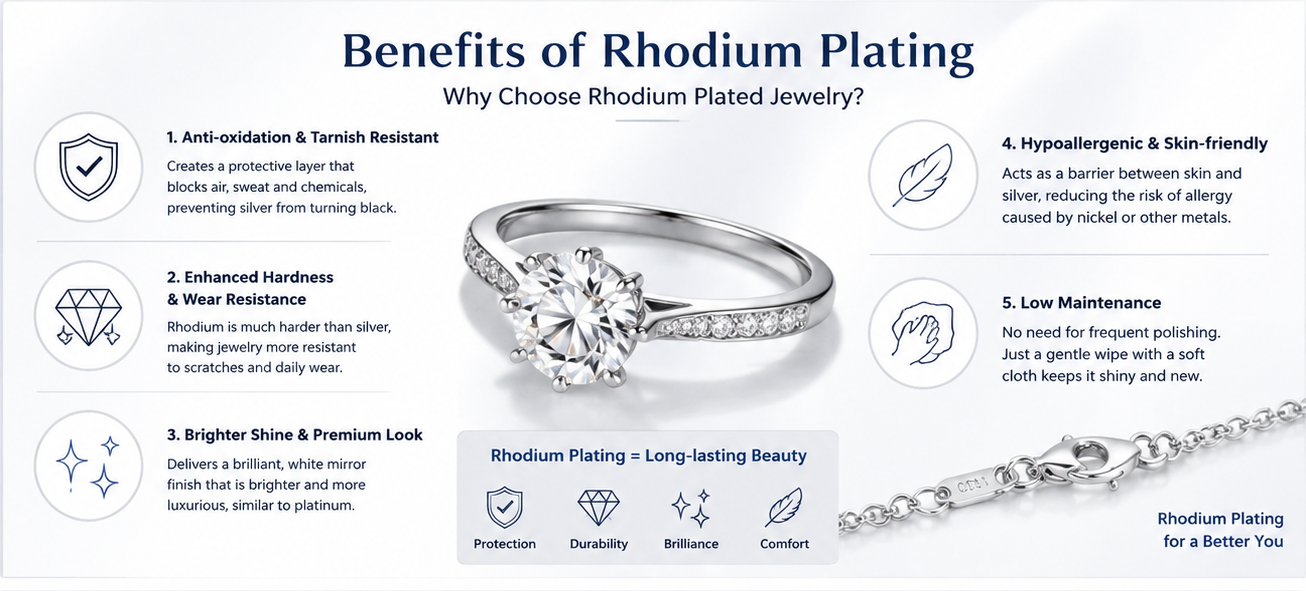
One of the biggest benefits of rhodium plating is its ability to prevent oxidation and discoloration. Silver can react with sulfur compounds from air, sweat, and cosmetics, causing silver jewelry turning black over time. A rhodium layer acts as a protective barrier, helping reduce contact between silver and external elements.
In addition, rhodium plating durability makes silver jewelry more resistant to daily wear. Since rhodium is harder than pure silver, the coating helps reduce minor scratches and keeps the surface smoother for longer.
For customers with sensitive skin, hypoallergenic jewelry coating is another important advantage. Rhodium can create a protective layer between the skin and the underlying metal, making jewelry more comfortable for many wearers.
How Long Does Rhodium Plating Last?
A common question among jewelry buyers is how long does rhodium plating last. The lifespan depends on the jewelry type, wearing frequency, and maintenance habits.
For necklaces and earrings, rhodium plating can usually maintain its appearance for around 1 to 3 years because these pieces experience less friction. Rings and bracelets may require re-plating sooner because they come into contact with surfaces more frequently.
Although rhodium plating is not permanent, worn coatings can be restored through professional re-plating, allowing the jewelry to regain its original shine.
Rhodium Plating vs Silver: Which One Is Better?
When comparing rhodium plating vs silver, the main difference is protection and maintenance. Natural silver has a warm metallic beauty but requires regular cleaning to remove tarnish. Without protection, oxidation can cause silver to lose brightness and develop dark areas.
For those who want easier maintenance, rhodium plated silver jewelry provides a better balance of beauty and durability. It helps maintain a bright white appearance while reducing the need for frequent polishing.
How to Care for Rhodium Plated Jewelry
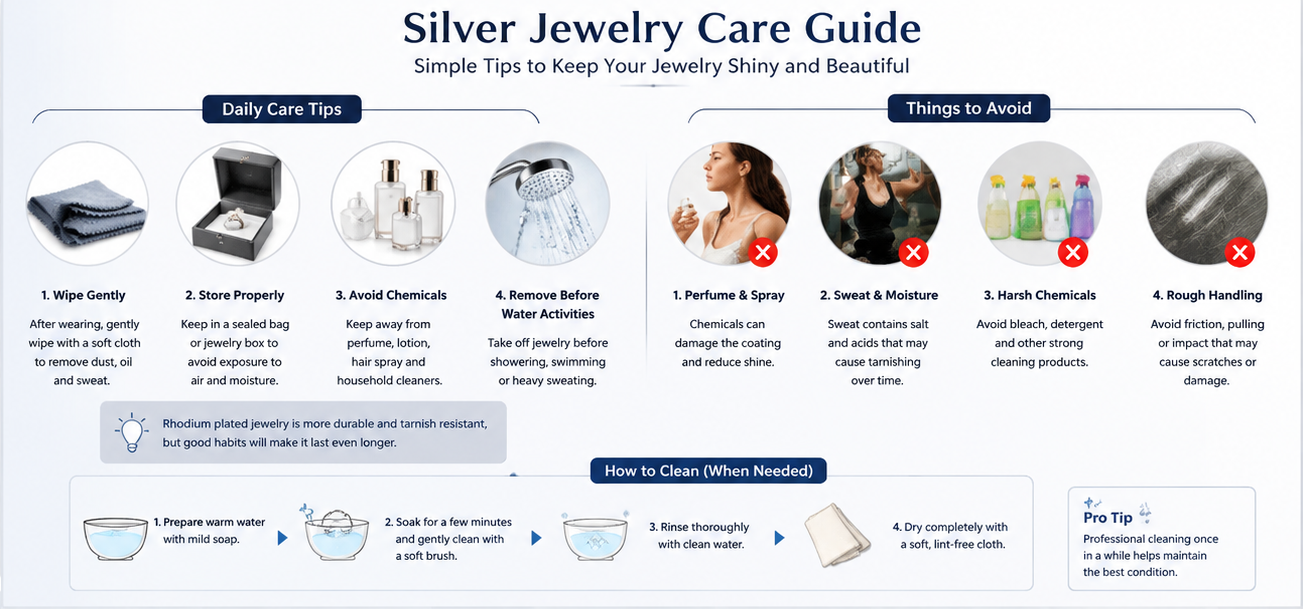
Although rhodium plating provides excellent protection, proper care can extend its lifespan. Avoid direct contact with perfumes, harsh chemicals, and excessive moisture. Learning how to clean rhodium plated jewelry is simple — gently wiping with a soft cloth is usually enough to remove dust and maintain shine.
For those who prefer long-lasting brightness, how to keep silver jewelry shiny is no longer a difficult question. Choosing rhodium-plated jewelry and following proper care methods can help preserve its elegant appearance for years.
Choosing rhodium plating means choosing better protection, lasting shine, and a more premium jewelry experience.