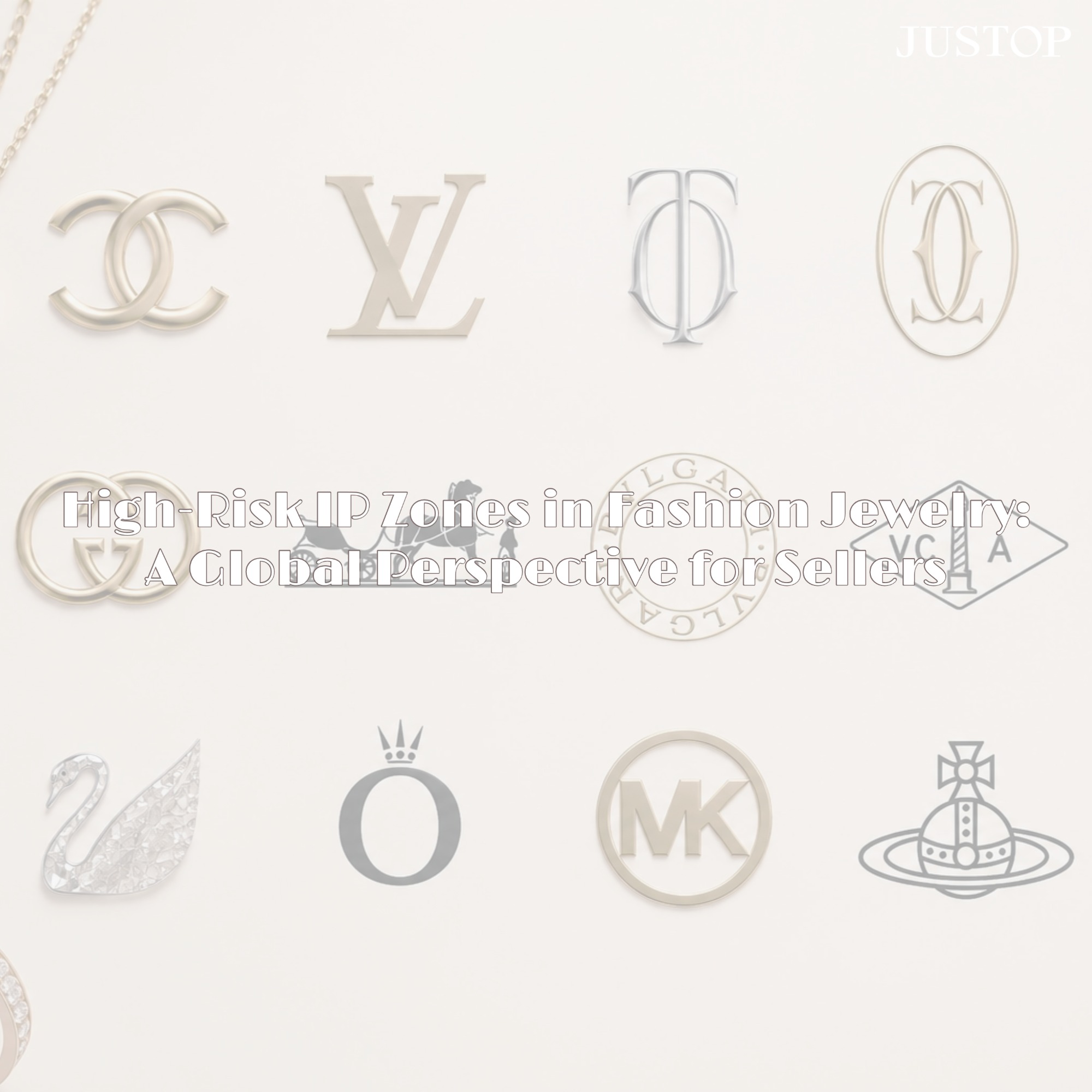
As the fashion jewelry market becomes increasingly global, intellectual property jewelry protection is no longer optional—it is essential. Recent enforcement actions by luxury brands highlight a consistent legal principle worldwide: using recognizable and commercially valuable designs without authorization can lead to severe consequences.
For brands and cross-border sellers, understanding international risks is key to long-term success.
Trademark Misuse and Global Enforcement Trends
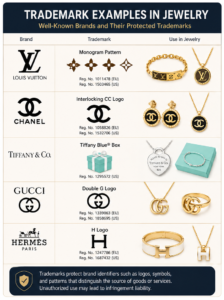
One of the most common risks falls under logo infringement law. Jewelry products that feature symbols, patterns, or motifs resembling well-known luxury brands can easily be flagged as infringing—even if they are not exact copies.
Under international trademark protection, famous brands often benefit from expanded rights across different product categories. This means a design element associated with a luxury brand may be protected even outside its original industry. These brand infringement examples show that courts focus on consumer perception—if a design creates confusion or weakens brand identity, it may be considered infringement.
For jewelry businesses, avoiding any visual elements that echo iconic brand signatures is critical.
Design Protection: Copyright vs Design Patent
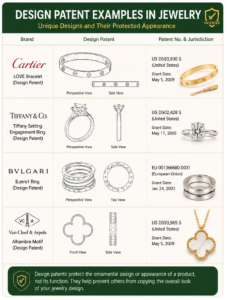
In addition to trademarks, product designs themselves are protected globally. Understanding copyright vs design patent helps businesses stay compliant.
A jewelry design patent (or design right in some jurisdictions) protects the visual appearance of a product, including shape, structure, and ornamentation. It provides a strong legal basis for enforcement, especially in the U.S. and EU markets.
At the same time, copyright infringement design applies to original artistic works, including sketches and 3D jewelry forms. Even without formal registration, creators may still have enforceable rights depending on the jurisdiction.
For manufacturers and private-label sellers, reproducing a design that appears “similar” can still pose legal risks if the overall impression matches an existing protected work.
Licensed IP and Entertainment Collaborations
The demand for pop culture-inspired jewelry—such as designs based on anime, films, or games—continues to grow globally. However, unauthorized use of such content is a major infringement risk.
Well-known brands often monetize their intellectual property through licensing agreements. Without proper authorization, producing or selling related items may violate multiple layers of IP protection, including copyright and trademark law.
Even small-scale or custom production does not eliminate risk. If the design is recognizable, enforcement action is still possible.
E-Commerce Platforms and Enforcement Systems
Global e-commerce platforms have significantly strengthened IP enforcement. Programs like Amazon’s brand registry allow rights holders to report suspected violations quickly.
Once flagged, listings may be removed immediately, and sellers can face account suspension, withheld funds, or legal escalation. For cross-border sellers, this makes compliance with international trademark protection standards even more critical.
Conclusion: Building a Compliant Global Jewelry Business
To reduce legal exposure in international markets:
- Conduct trademark and design searches before launching products
- Avoid using recognizable brand elements, even as “inspiration”
- Secure official licenses for any third-party IP usage
- Maintain documentation proving original design or legitimate sourcing
In a global marketplace, respecting intellectual property is not just about avoiding penalties—it is a strategic advantage that builds trust, credibility, and long-term brand value.