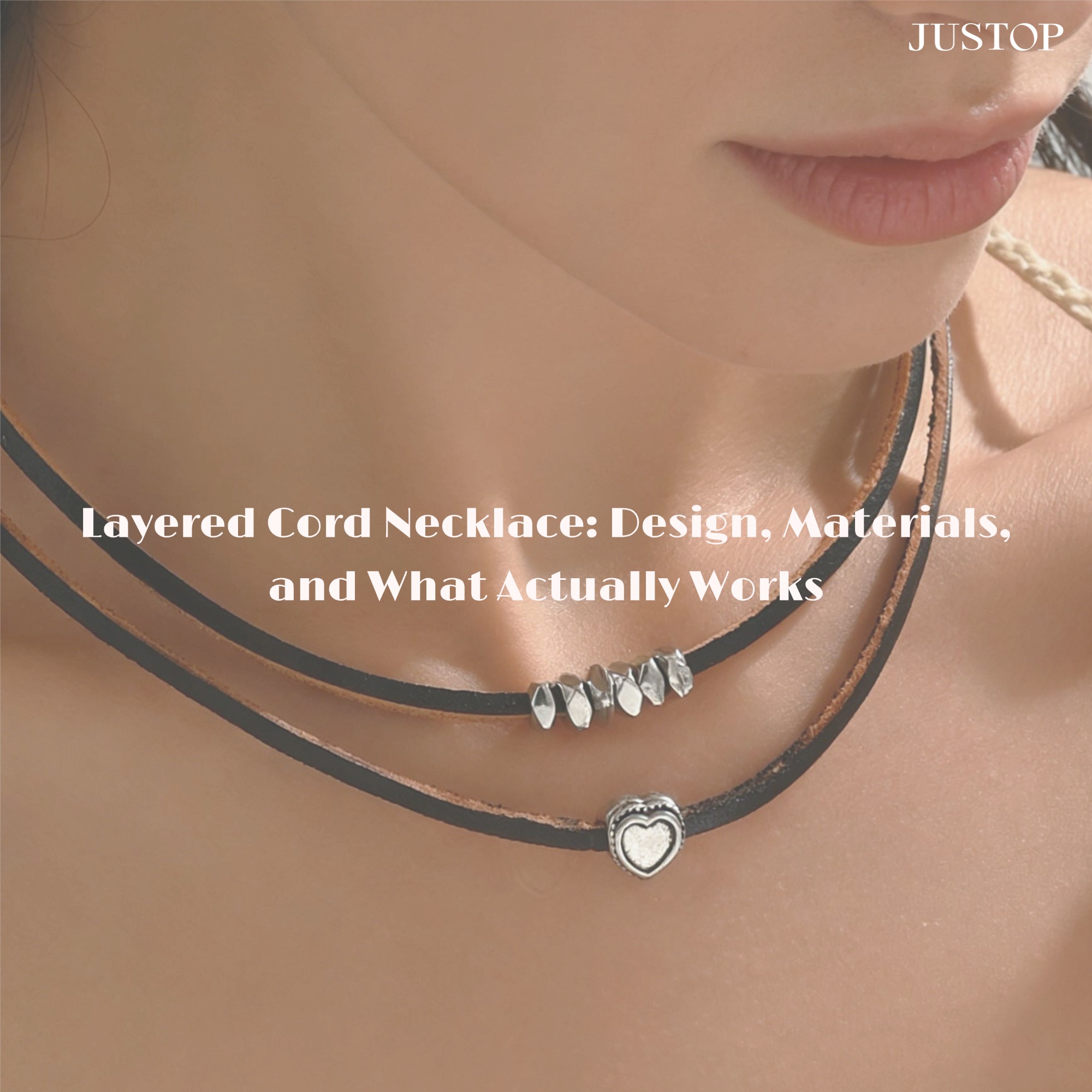
Layered Cord Necklace: Design, Materials, and What Actually Works
Layered cord necklaces have been around for a while, but they keep showing up in collections season after season. If you walk through a trade show or scroll through jewelry wholesale sites, you will see them everywhere. The reason is simple: they are easy to wear, work with different styles, and sell well across price points.
This post covers the basics—design style, typical layers and lengths, cord materials, and what to watch out for if you are sourcing or making them.
What Style Are We Talking About?
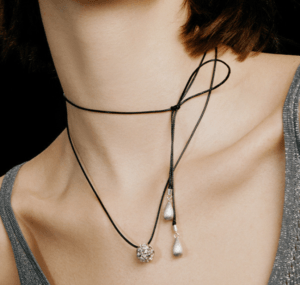
Most people call this look bohemian or boho. But in reality, layered cord necklaces have moved beyond that. You now see them in minimalist collections, resort wear lines, and even some contemporary brands.
The main idea is layering. Unlike a single chain that hangs alone, a layered piece uses two or three strands to create depth. The contrast between soft cord and metal is a big part of the look. Some designs add beads or pearls to make the piece feel more finished.
A pearl cord necklace, for example, works well for customers who want something feminine but not too dressy. A beaded cord necklace leans more handmade and artisanal. Neither is better—they just suit different buyers.
One thing to note: the cord itself does a lot of the visual work. A rope and chain necklace can look completely different depending on whether the cord is thick or thin, dark or light.
How Many Layers? What Lengths?
Most layered cord necklaces come as a set of two or three layers. Two layers look cleaner and work better for smaller necklines. Three layers give more movement and are more popular for everyday wear.
Here are the typical lengths for a three-layer set:
| Layer | Length (inches) | Length (cm) | Where it sits |
| Shortest (choker style) | 14–15″ | 35–38 cm | High on the neck |
| Middle | 16–18″ | 40–45 cm | Just below the collarbone |
| Longest | 20–24″ | 50–60 cm | Mid-chest |
The gap between each layer matters. If the difference is less than two inches, the strands tend to tangle or sit on top of each other. A gap of 2–3 inches (5–8 cm) keeps them separate and readable.
Adjustability is also common. Many styles are designed as an adjustable cord necklace with a sliding knot or an extender chain. This helps because neck sizes vary and different tops have different necklines.
What Is the Cord Made Of? Is It Strong?
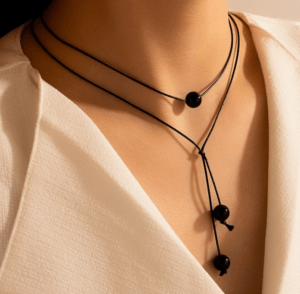
The word “cord” covers several materials. Each has trade-offs. Here is what you actually need to know.
Nylon Cord Necklace:
Nylon is the most practical choice for everyday jewelry. It is strong, resists sweat and moisture, and does not stretch out over time. A nylon cord necklace can be worn daily without showing much wear. It is also available in many colors.
If you see a product listed as a waterproof cord necklace, it is almost always nylon or another synthetic fiber. These do not absorb water, so they dry fast and do not get smelly.
Leather Cord Necklace:
Leather gives a different look. It feels more natural and has a slight texture. Over time, soft leather develops a worn-in appearance that some customers like. The downside is that leather does not like water. Regular exposure to sweat or rain will make it stiff and eventually crack.
A leather cord necklace works well for occasional wear or for customers who understand the care involved. It is not a good fit for beach or gym use.
Suede Cord Necklace:
Suede is softer than regular leather and looks more relaxed. But it is also less durable. The surface picks up dirt and oil easily, and it can start to look messy after a few months of regular wear. Suede works best for lower-cost items or for customers who rotate their jewelry often.
Waxed Cotton Cord Necklace:
Waxed cotton is a budget-friendly option. The wax coating gives some water resistance, and the cord feels lightweight on the skin. However, the wax wears off over time, especially in areas that rub against clothing or skin. Once the wax is gone, plain cotton absorbs moisture and can fray.
A waxed cotton cord necklace is fine for light use but not ideal for daily wear in humid climates.
Does the Cord Break Easily?
This is the most common question buyers ask. The short answer is: it depends on the material and how the ends are finished.
Nylon cord is very strong. A well-made nylon cord necklace will not snap under normal use. You would need to cut it with scissors or rub it against a sharp edge for a long time.
Leather and suede are weaker when wet. If a customer wears a leather cord necklace while exercising or swimming, the cord can stretch and eventually break.
The weak point is usually not the cord itself but the connection point—where the cord meets the clasp or the knot. A poorly secured knot or a cheap crimp bead will fail long before the cord does.
When sourcing, check how the ends are finished. Knots should be sealed with a drop of glue or melted slightly to prevent unraveling. Metal crimps should be tight and covered.
Why These Necklaces Sell Well
From a wholesale perspective, layered cord necklaces have a few advantages.
First, they are forgiving. Unlike a single pendant that needs to hit exactly the right spot, a layered piece looks good even if it shifts around.
Second, they fit multiple price points. A simple two-layer nylon cord necklace with a small metal charm can retail for under $20. A three-layer design with leather, beads, and a heavier clasp can go for $50 or more.
Third, they photograph well. The movement and depth show up clearly in flat lays and on models, which helps with online sales.
For buyers looking at fashion necklace wholesale options, layered cord designs are a safe bet. They are not a passing trend, and they work across age groups and style preferences.
Final Thoughts
Layered cord necklaces are not complicated. They rely on good material choices, proper length spacing, and clean finishing. A nylon cord necklace handles daily wear better than most people expect. A leather cord necklace looks great but needs care. A waxed cotton option works for low-cost lines.
If you are designing or sourcing these, pay attention to the connection points and the gap between layers. Those two details separate a necklace that lasts from one that falls apart after a few wears.