
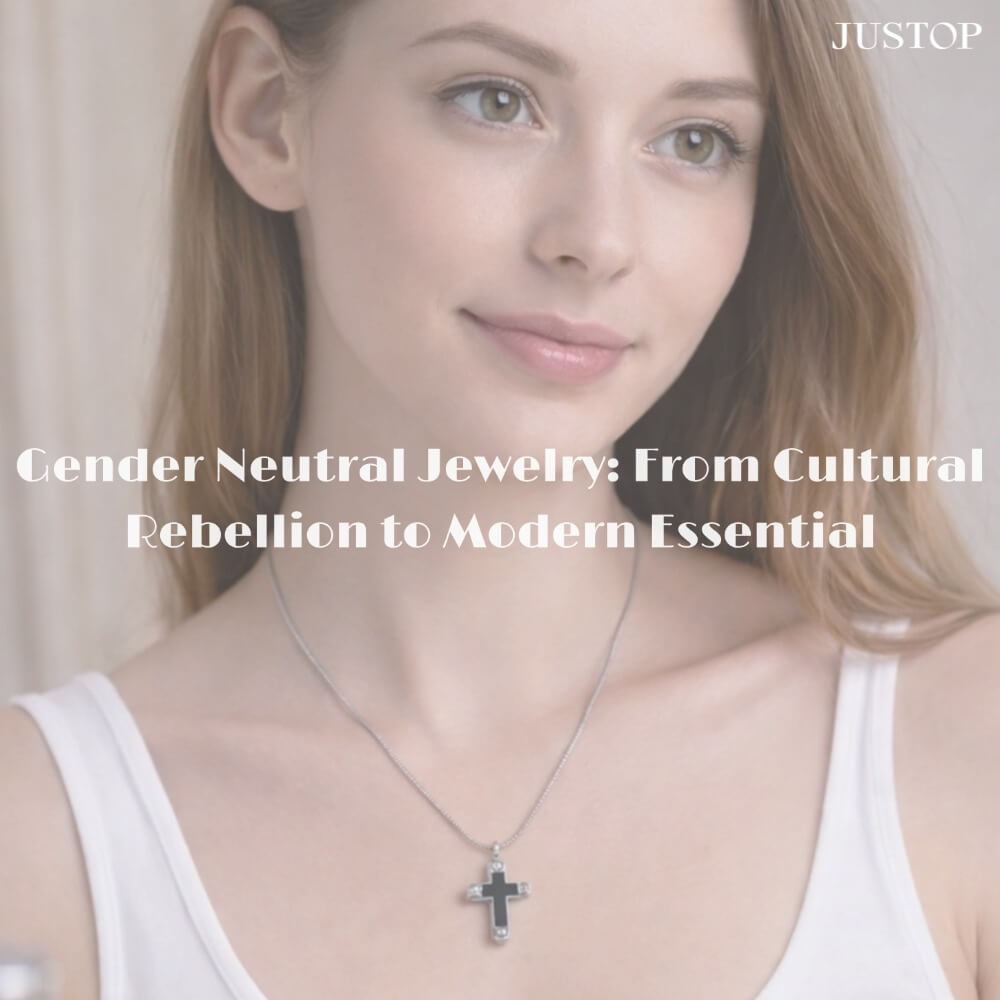
From Counterculture to Contemporary Jewelry Design
Gender Neutral Jewelry did not emerge overnight. Its roots are deeply connected to social movements that challenged rigid gender roles. In the early 20th century, figures like Coco Chanel blurred traditional boundaries by introducing pared-down accessories that emphasized simplicity and function over ornamentation. By the 1960s and 70s, amid feminist movements and cultural revolutions, jewelry became a visible symbol of resistance. Men embraced necklaces and earrings, while women adopted bold metal cuffs and wide rings—early expressions of what we now call Androgynous Jewelry.
Subcultures of the 1980s and 90s further accelerated this shift. Punk, rock, and hip-hop aesthetics popularized safety pins, dog tags, and chunky chains, transforming Statement Jewelry into a form of identity. These designs laid the foundation for today’s Genderless Jewelry, where expression matters more than prescribed gender norms.
A Market Driven by Values and Self-Expression

In the 21st century, Unisex Jewelry has moved decisively into the mainstream. Millennials and Gen Z consumers favor products that align with personal values, inclusivity, and authenticity. As a result, Inclusive Jewelry and Non Binary Jewelry have become central to modern branding strategies.
Globally, North America and Europe remain mature markets where design philosophy and social messaging are key. Meanwhile, Asia-Pacific regions—especially China, Japan, and South Korea—are seeing rapid growth influenced by street culture and K-pop aesthetics. Across regions, DTC brands and social media platforms dominate distribution, emphasizing storytelling over gender-based marketing.
Design Language: Minimalism Meets Industrial Strength
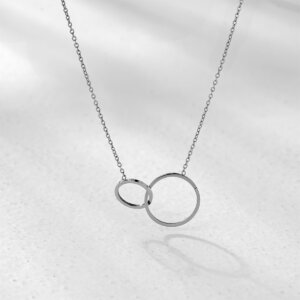
The visual identity of gender-neutral accessories is defined by restraint and structure. Modern Minimalist Jewelry favors clean lines, balanced proportions, and architectural forms. Designers frequently draw inspiration from Architectural Jewelry and Industrial Style Jewelry, resulting in pieces that feel powerful yet refined.
Popular items include Unisex Rings, Unisex Necklaces, Chunky Chain Necklaces, and Wide Band Rings—all designed to feel substantial without sacrificing wearability. Materials play a crucial role: Stainless Steel Jewelry, Polished Metal Jewelry, and Matte Finish Jewelry highlight durability and texture, while reinforcing a contemporary aesthetic. Increasingly, brands emphasize Handcrafted Metal Jewelry to convey authenticity and craftsmanship.
Strategy, Longevity, and Modern Jewelry Trends
Successful gender-neutral collections are often modular and stackable, encouraging personal styling rather than fixed looks. From Metal Cuff Bracelets to sculptural pendants, flexibility enhances both emotional connection and long-term value.
Ultimately, this trend reflects more than design—it represents a cultural shift. Modern Jewelry Trends point toward a future where accessories are defined by individuality, not labels. Positioned at the intersection of Contemporary Jewelry Design and Minimalist Luxury Jewelry, gender-neutral jewelry offers brands a powerful way to connect with a new generation seeking freedom, identity, and self-expression.